
 Events
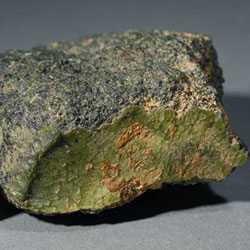
Scientists believe they have discovered the first meteorite that came to Earth from Mercury. An unusual green piece of stone was named NWA 7325. It was discovered in southern Morocco in 2012 and was broken into 35 fragments with a total weight of 345 grams.
The dark green pebbles were sold to meteorite merchant Stefan Ralew, who sent samples to the University of Washington to planetary meteorite specialists.
The researchers found that these samples contained a surprisingly low percentage of iron but high levels of magnesium, aluminum and calcium silicates. These proportions correspond to those of Mercury's surface, according to data obtained by NASA's Messanger spacecraft.
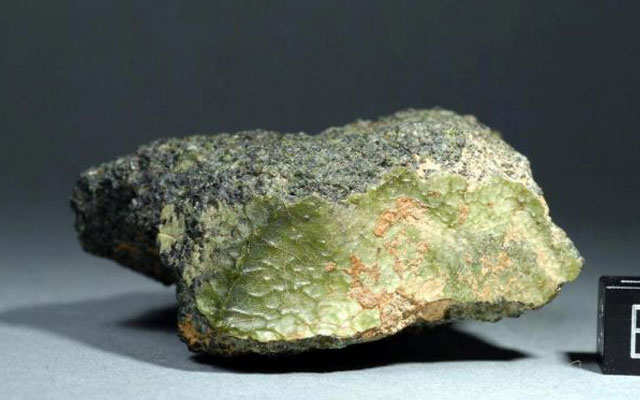
However, the rock contains more calcium silicate than is found on Mercury's surface, so scientists have suggested that this meteorite may have once been part of deeper layers planets. It most likely broke away in a powerful collision, was ejected into space, and eventually landed on Earth's surface.
“This sample may be from Mercury or from a smaller object,” the scientists said. “It is very likely that this rock formed as a “foam” in the upper layers of magma.”
Where do meteorites come from?
Visitors from space meteorites — space rocks that often fall to the surface of our planet — have always been of interest to scientists, as these unusual stones carry a lot of useful information about the origin of the planets and the entire solar system.
It is believed that a huge number of small meteorites fall to the Earth's surface every day — up to 5-6 tons, but they are mostly so small that their fall goes mostly unnoticed. Moreover, most meteorites fall into the ocean, where it is impossible to notice them fall or find them later.
The origin of meteorites
Most meteorites come to us from the asteroid belt, the area between the orbits of Mars and Jupiter, and are fragments of these smallest celestial bodies — asteroids. Asteroids, moving in their orbits, collide with each other, change direction, and some of them hit Earth.
Younger meteorites are of Martian or lunar origin, some of them are “only” about 180 million years old, which is quite young by cosmic standards. The composition of these meteorites is very similar to that of the soil of the Moon or Mars, which is why it is concluded where the meteorite came from.
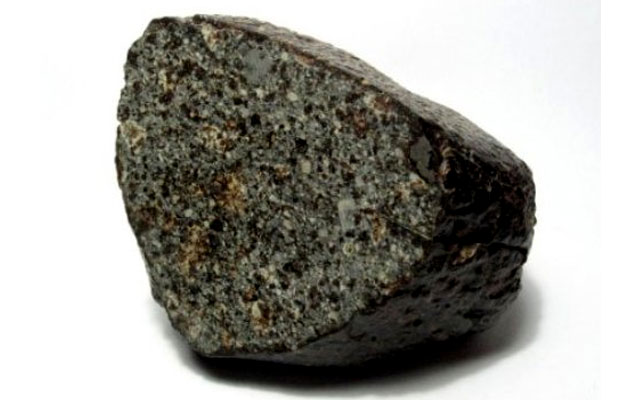
Asteroidal meteorites
Fragments of the planet Mars that fell to Earth in the form of meteorites have been found more than once, but evidence that these meteorites came from Mars was obtained only in the 1980s, when gas meteorites were discovered inclusions in their composition corresponding to the gases in the atmosphere of Mars.
When celestial bodies, such as fragments of asteroids or comets, collided with the surface of Mars, pieces of native rock split off from it, which flew into outer space and could eventually fall on the neighboring planet is Earth.
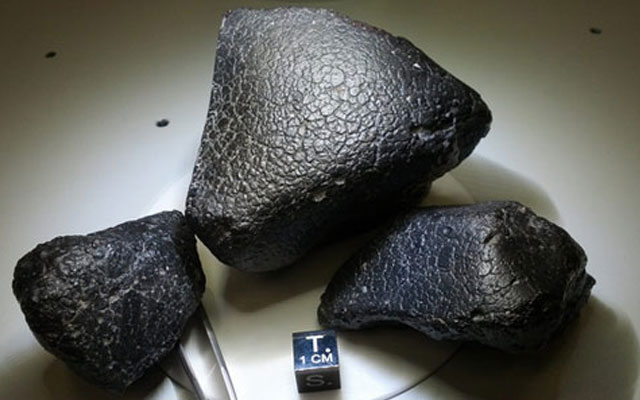
Martian meteorites
The first lunar meteorites were discovered by Americans in the early 1980s in Antarctica. Subsequently, moonstones began to be found in other parts of the planet — in the deserts of Australia and Africa. These stones were unusually similar in composition to samples of soil brought from the Moon.
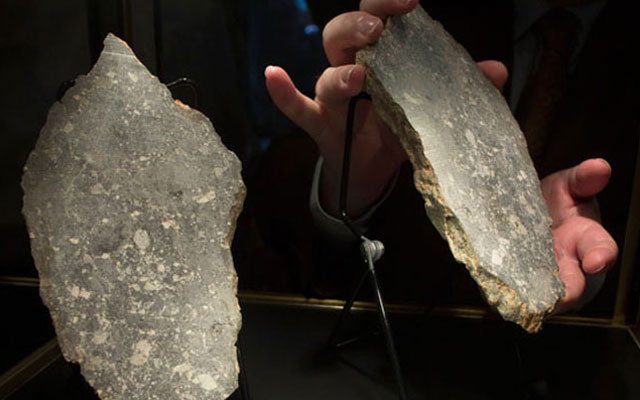
Lunar meteorites