
 Useful tips
Being a parent is a great experience, but it's also a tough job. We all want to be perfect parents. But as you know, there are no perfect ones.
Mistakes are part of our lives. In this review, we offer several myths about parenting. By taking them into account, you will be able to avoid mistakes in education.
Parental love
1. Compulsory love for the newborn
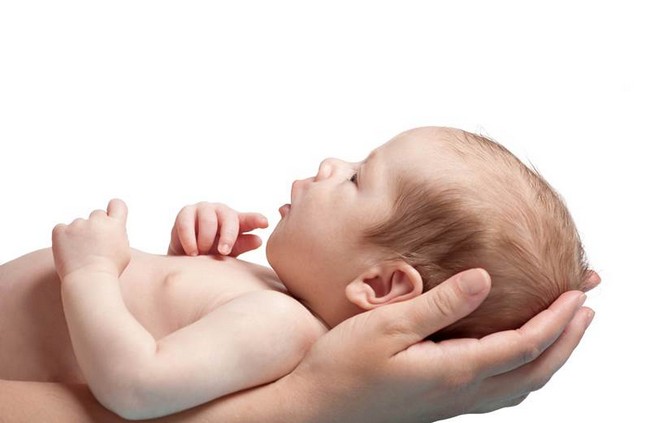
It is generally accepted that the birth of a child is the happiest moment in every woman's life. The image of a woman glowing with happiness, with a baby in her arms, is formed in the future mother's subconscious from the first minute she learns about her pregnancy. And now the baby was born, but the maternal instinct did not work. Where is that overwhelming feeling of love?
It is believed that every woman has an innate knowledge of how to be a good mom, which is automatically included when a child is born. In fact, the experience and acceptance of motherhood should not necessarily take place at the time of the child's birth. Love for a baby requires a lot of strength from a woman, and sometimes she just needs to rest, regain physical strength, get enough sleep, and only then will her maternal feelings for the child appear.
If the baby is born and you still don't feel love, don't worry and don't waste your energy on guilt. That doesn't mean you're a bad mom. Love doesn't have to happen automatically. A woman may feel depressed in the first days after childbirth, and experience a variety of feelings, and in most cases they are normal and do not characterize maternal qualities in any way. In time, everything will come.
Breastfeeding
2. If you breastfeed for a long time, the baby will grow addicted and his sexual development will suffer
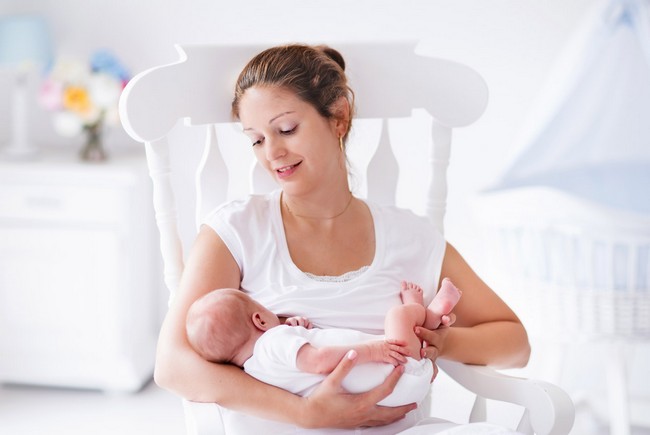
It is widely believed that a child who is breastfed for a long time will be dependent on his mother due to too much attachment to his mother. For a child under the age of three, attachment to his mother is absolutely natural, and it should be alarming not that the baby is very attached to his mother, but that he does not have such attachment.
It is also believed that prolonged feeding can affect sexual orientation. This is especially harmful for boys. This is a fallacy. In fact, there is no evidence of how breastfeeding affects sexual orientation. The special bond, the psychological attachment that is established between mother and child during feeding, lasts for life. These kids adapt better in adulthood.
3. If you often hold your child in your arms, he will grow up spoiled
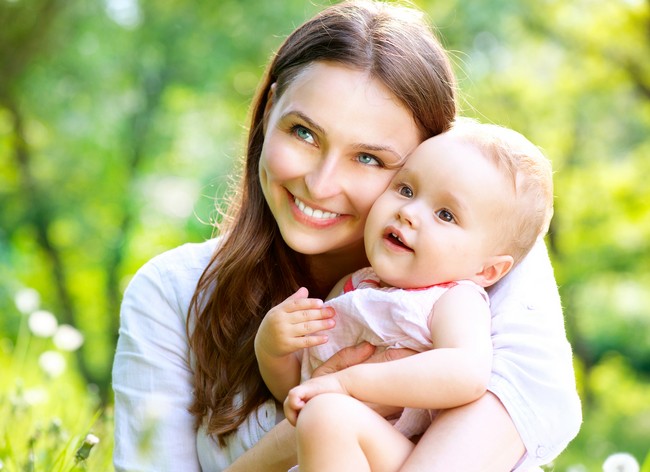
Newborn crying is an innate and involuntary response to discomfort, designed to inform parents about the baby's needs. There are different needs, not only physiological ones. The need for physical contact with mom is also a basic necessity. But many parents are afraid to take the baby in their arms often, especially if the child has been fed and diapers have been changed, believing that this can spoil the baby.
Now scientists have already proved that these harsh methods will bring nothing but a upset psyche and disorders in the relationship between parents and children in the future. The fact is that the baby needs to get a certain set of sensations and experiences when interacting with his mother. There is a so-called “manual period” (up to about three months), during which the baby must be carried in the mother's arms all the time. At 3-4 months, the child is no longer bothered by gases, and he is more adapted to the external environment. He still likes to be picked up, but now for different reasons. Scientists have found that a distance of 30-40 cm is the best for an infant's visual system to work. But this is exactly the distance between the face of a mother and a child.
In the arms of an adult, the baby gets the best opportunities for successful mental development. Children who are often carried a lot in their arms, kissed and stroked, develop better and are calmer. The moment when the baby will no longer want to sit in his arms will come very quickly. You will remember these moments with anguish. And don't worry, he'll go to the registry office on his own feet, you won't have to carry him in your arms.
Free education
4. Permissiveness

A new popular tactic for raising a child is to put their interests first and not forbid anything at all. After reading modern psychological literature, young parents drew wrong conclusions. They confused free education and permissiveness. The principle of permissiveness, according to adherents of this tactic, allows the child to enjoy childhood. Parents expect more independence from a child who can do anything, because the child can choose the direction of development himself.
But as Jean Jacques Rousseau said: “Do you know what is the surest way to make your child unhappy? This is to teach him not to refuse anything.” This practice does not justify the sacrifices that parents make in order to raise their child, does not live up to expectations, and directly harms both the child and the family as a whole. Of course, no one argues that pampering children and giving freedom is harmful. You just need to do everything in a dosed manner.
Read also: Choosing a sport for a child
5. All the best for children
Of course, it is quite natural that parents try to create favorable conditions for their children's development. But there are some nuances here. Today you bought all the best for a newborn, an expensive stroller and crib, tomorrow a private kindergarten and an elite school, and the day after tomorrow your child will be surprised that you can't always satisfy him all whims. And parental bewilderment knows no bounds. How could it be, you tried to do everything for your child, you gave your best. And he grew to be selfish. But is it the child's fault? After all, it is important for parents to show their love through self-sacrifice; the child does not need it. Children need love, attention, warm family relationships and healthy parents.
The role of parents in raising children is the main one, determining, they become the people who lay in the child's future qualities. The most important goals of parenting are the desire to raise a healthy, independent and happy child who is willing and able to benefit himself and society. Thanks to parents, the child learns how to interact with the world around him. Therefore, if you want to raise a healthy, kind and happy child, remember that personal example is fundamental in this matter.