
 Health
As you know, one of the most effective ways to control the course of a disease such as arthritis (including all its varieties) is to join regular physical training. However, this definition sounds too vague, so we offer more information on how to properly manage the symptoms of arthritis through exercise. In general, exercise is beneficial from all points of view, even if you have no prerequisites (including hereditary ones) for developing arthritis. They help you keep your joints flexible, maintain muscle strength, and improve your endurance. For patients with arthritis, the benefits of regular exercise can hardly be overestimated. They can even affect things as natural as your ability to write or type on a computer that can easily be prevented by arthritis.
Needless to say, how useful it is for a person suffering from such a disease to feel back in the ranks, improve his state of mind, reinforce self-esteem and make his own is life better overall? And all this is thanks to exercise! But the most important merit of exercise is that it generally helps to improve the body and makes it possible to live a fuller and longer life. And it doesn't matter whether a person has arthritis or not. However, many people who suffer from arthritis consider this disease to be a reason to avoid physical activity. They mainly blame symptoms such as pain, stiffness (stiffness) and constant fatigue. Some people are surprised to learn that people with arthritis who exercise regularly feel much better and suffer from the symptoms of the disease. Thus, exercise for people suffering from arthritis can be divided into three types, each of which plays an important role in reducing the intensity of the symptoms of the disease.
Stretching exercises
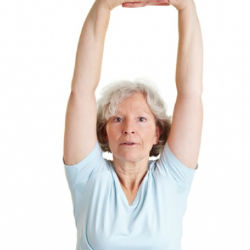
 These are moderate intensity exercises that must be performed daily, as they can support and even improve the patient's body's motor capacity. Stretching exercises are part of the standard therapeutic program, which is recommended for patients suffering from arthritis. In addition, such exercises are extremely important for comprehensive measures to maintain a patient's good physical shape. By developing flexibility, you improve the functionality of all joints in the body, while reducing the likelihood of injury. Various elements of Chinese Tai Chi Chuan gymnastics, yoga exercises and some gymnastic floor exercises can be used as stretching exercises.
Muscle training exercises
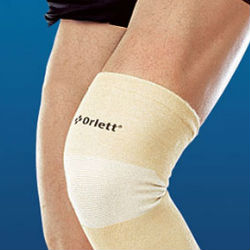
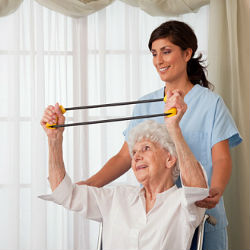
These exercises are more intense when performed; they can strengthen your muscles and add stamina to your body, especially if you do them regularly. Such exercises require more effort from your muscles, as they often include a weight lifting complex, despite the risk of injury. It is not necessary to work with a lot of weight, sometimes it is enough to use an expander for such exercises. As a rule, it makes sense to use an elastic bandage to avoid bruises and sprains. Literally, after a short period of time, your muscles will adapt to the load you offer them. Strength exercises are well interspersed with playing, for example, tennis, active walks and a set of exercises from the fitness program to strengthen the spine — Pilates.
Cardiorespiratory and aerobic exercises
 When performing these exercises, as a rule, the main muscles of the body are involved. Such exercises consist of repetitive, rhythmic movements, which has a positive effect on the health of the heart muscle in general, lungs, and so on. These exercises are very beneficial because they allow you to control your body weight and also improve your mood by promoting the release of endorphins, the so-called happiness hormones. If you live, for example, outside the city, do not lament the inability to do cardiorespiratory and aerobic exercises. You don't have to look for a gym to perform them. Activities such as cleaning fallen leaves in the garden, mowing grass, and just walking with your dog every day will completely replace exercising in the gym.
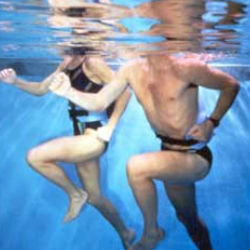 Numerous studies show that most people suffering from arthritis can safely perform most aerobic exercise to meet the body's physiological needs in oxygen. Swimming and water aerobics also have a good effect on the body. However, it must be remembered that the load should be increased gradually! Start with ten minutes of exercise and do it no more than three times a week, gradually increasing the duration as you increase your stamina. The safest level of intensity for aerobic exercise is medium, which means that you can talk while doing various elements without knocking down your breath. Start with at least half an hour a day and do it at least three times a week. If you find it difficult to maintain this regime, take short ten-minute breaks.
Why is water aerobics useful?
Swimming, aqua aerobics (water aerobics) and other exercises in warm water are extremely beneficial for people suffering from arthritis. Here are a number of reasons why you should pay attention to this type of physical activity:
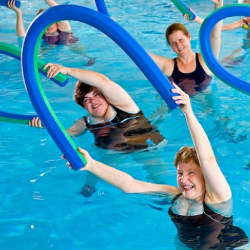 — The soothing effect of warm water is ideal for relieving symptoms of pain and joint stiffness in arthritis.
— When immersed in warm water, the patient's body temperature increases, which helps to dilate blood vessels and improve blood circulation.
— The ability to stay on the water helps to gently, without stress, perform stretching exercises for muscles and joints.
— Water provides sufficient resistance to strengthen muscles when exercising. In addition, if these exercises are performed correctly, the likelihood of stretching decreases.
— When treated with mineral waters, the beneficial effect of procedures only increases. By exposing your body to jets of oxygen-rich mineral water, you simultaneously relax your muscles and give them a feeling of firmness.
— In mineral water pools, you can also exercise quite intensively, but remember that the water temperature should not be very high.
— When exercising in warm mineral water, care must be taken: for example, you should not stay in the pool for a long time if you have heart problems, circulatory problems, high blood pressure, diabetes, multiple sclerosis, skin irritation, and some other serious health problems.
— If you feel nauseous (even mild) while in a pool with warm mineral water, you should immediately stop exercising, leave the pool and consult a doctor.
— If your joints begin to swell, increase pain and stiffness while exercising in warm water, you should also stop exercising and seek medical attention.
— Although this goes without saying, it would be useful to recall that such water treatments cannot be performed even while slightly intoxicated.
— Such procedures can cause not only changes in blood pressure, but also drowsiness.
— If this is your first time visiting a mineral pool with warm water, you should stay in the water for a while without exercising to allow your body's muscles and joints to adapt to in a warm, humid environment. After that, you can start the exercises. And after doing a set of exercises, spend a few minutes in the water in a relaxed state, allowing your muscles to relax before leaving the pool.
Finally, if you don't spoil your body with regular physical activity, before visiting such sources (and even more so before exercising in them!) you should always consult a doctor.