
 Ecology
The decrease in the amount of ice in the Arctic may be due to the unusually cold and snowy winter that was observed this year in the Northern Hemisphere, as new models show.
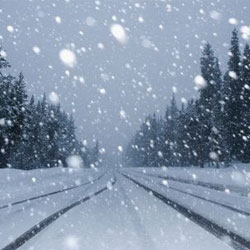
From 2007 to 2011, most parts of the United States, northwestern Europe, and northern and central China experienced very heavy snowfall. Some researchers believe that such harsh winters may be the result of more and more sea ice melting in the Arctic. A record amount of ice melted in 2007 due to global warming, according to the National Snow and Ice Center.
To test this theory, the researchers used data on Arctic sea ice and data on ocean surface temperatures to compile a climate model. This model pointed to two mechanisms for how reducing the amount of ice can cause heavy snowfalls.
First, the disappearance of ice can change air circulation in the atmosphere, so more cold masses from the Arctic will move south. At the same time, melted ice will raise sea levels. As a result, more water will evaporate into the atmosphere, and vapors will turn into snow due to the cold.
“If Arctic ice continues to melt, we are likely to face more heavy snowfalls and snowstorms in the coming years,” says study author Jiping Liu. climatologist at the Georgia Institute of Technology in Atlanta.
The link between the decline in ice stocks in the Arctic and heavier snowfalls sounds quite plausible, say other scientists. However, complex atmospheric phenomena are rarely caused by just one factor.
Atmospheric dynamics are so diverse that even if there are general weather trends over time, situations do not repeat themselves one-to-one. Take the past winter in the Northern Hemisphere, for example. This year, the Arctic did not have much ice, but the US had a record warm winter, and Europe was covered with snow, although the severe cold did not come in the first month of winter, but a little later.
Scientists predict that if the planet's climate continues to get warmer, unusual weather events will occur regularly. Scientists will be faced with the challenge of finding out whether these anomalies will be part of global warming or a natural variation.
If the same anomalous phenomena recur from year to year, it will be safe to say that these are climate changes, not temporary phenomena.