
 Unbelievable facts
When the current threw the dead body of a very large sperm whale onto the Scottish coast, the first thing that beachgoers thought was to regret the death of this amazing creature.
However, right after that, the idea arose about what to do with this mountain of rotting flesh now?
The giant body of a sperm whale, which was almost 14 meters long, was found early on Sunday morning off the coast of Portobello, one of Scotland's most famous beaches.
Due to its huge size, it was impossible to simply cut the dead animal into pieces and take it out separately, so the sperm whale hung out in shallow water for several days.
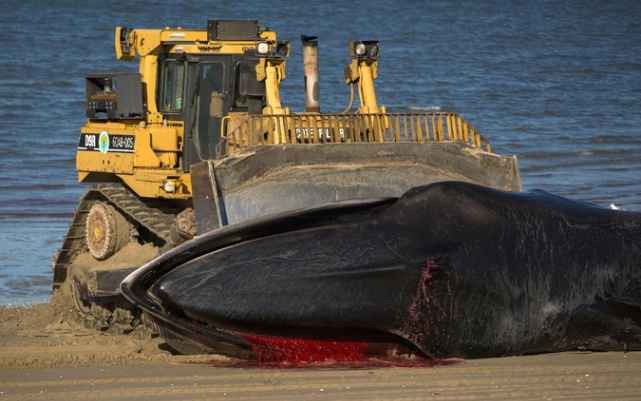
The photos of the sperm whale were taken four days after the body was discovered.
First, several crews dragged the dead animal to a nearby port, and then a crane took it out of the water and loaded it into an 18-wheeled truck. Only after doing all this, the unfortunate animal was taken to the burial site and buried.

This is certainly not the first problem of its kind. How were issues related to the burial of large marine animals used to be resolved?
Whale explosion
The most tragically famous idea for solving this problem was proposed in 1970 by an “expert” from Oregon.
Then the carcass of the whale nailed to the shore was filled with explosives, hoping that after the explosion, the poor animal would leave only small pieces that would be removed very quickly.
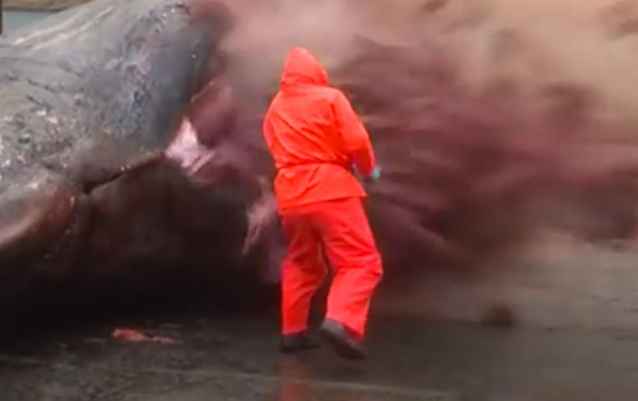
For safety reasons, no one was within a 2-kilometer radius of the action. However, when the explosion happened, the bones and pieces of whale flesh did not just fall on the heads of people passing by at a very decent distance from the site, but they also damaged cars standing far away. Thus, empirically, it became clear that this method of solving the problem is no good.
The proposal to burn the bodies of dead whales was equally ineffective. Firstly, because of their size, and secondly, because of the large fat layer in their bodies.
Natural decomposition

Allowing nature to deal with dead creatures on its own is also not an option, because it will take too long, during which the body will emit extremely unpleasant odors.
Dead whales
When a dead body of this size falls to the bottom of the sea or ocean, it can feed an entire ecosystem for 50 to 100 years.
Read also: The incredible abilities of blue whales
Carcasses that come ashore and lie in shallow waters begin to decompose much faster, but, nevertheless, natural decomposition can only be acceptable for those regions that are at a decent distance from settlements.
Towing the body far out to sea is also not an option, as it can be thrown back to some other beach. Moreover, it can be dangerous for small vessels.
Burial

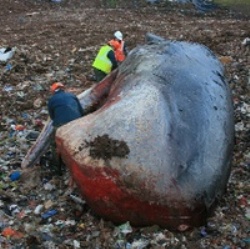
In 2012, the body of a whale washed ashore in an American city in New York and had to be buried there because it was impossible to move the carcass in any way .
But this option is also accompanied by many problems, because it was necessary to dig a huge hole, immerse the unfortunate animal into it and bury it, adjusting to the ebb and flow.

This was also the case in Uruguay. Officials resolved the issue by transporting the animal's body to one of the city's landfills. For this purpose, a special vehicle with a flatbed platform was used.
However, the process of transporting a whale can be no less dangerous. For example, in 2004, in Taiwan, while transporting an animal's body around the city, it suddenly exploded, leaving all buildings, cars and passers-by with a fetid slurry.

Uruguay also carried the body through the city, but there were no problems. In the landfill, using a tractor, they dug a huge hole, which also consisted of garbage, lowered a whale into it and immediately buried it.
Read also: The loneliest whale in the world
Apparently, this is the most optimal solution today. Moreover, the decomposing body fills the soil with nutrients and elements, because it is a natural part of the life cycle.
Interesting facts about whales
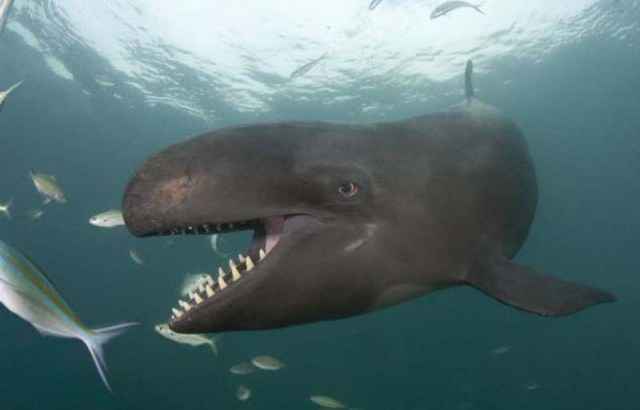
– Whales are mammals that are fully adapted to living in water. Scientists believe that the ancestors of whales, along with dolphins and porpoises, were land animals that returned to the water element about 50 million years ago, having lived for many millions of years to the ground.
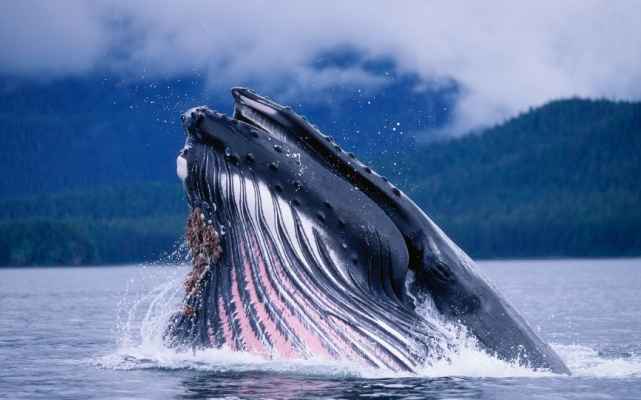
– Two suborders of these animals are known: toothy, which love to feast on large fish, and mustachioed, which are living filters because of their combed mouth, through which a huge one is filtered amount of water. They feed on plankton and krill.
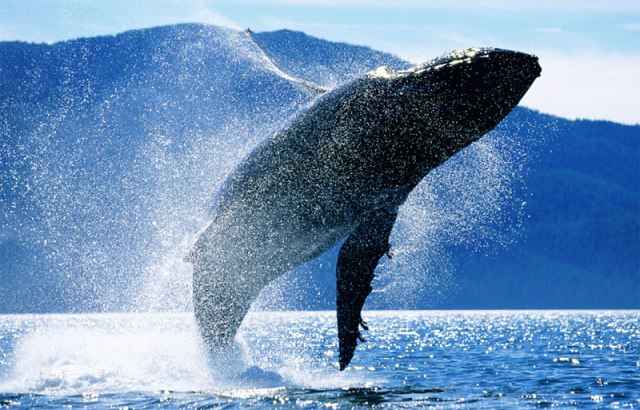
– Whales, like dolphins, should occasionally appear on the surface due to the peculiarities of the respiratory system. Therefore, only half of their brain system can sleep at a given time.
– Most etymologists believe that the word whale in English comes from the German “hwal”. But there is another version according to which the English whale may be derived from the word “wheel”, because the whale's back, especially when seen from the water surface, is very similar to that of a submerged sea wheel.
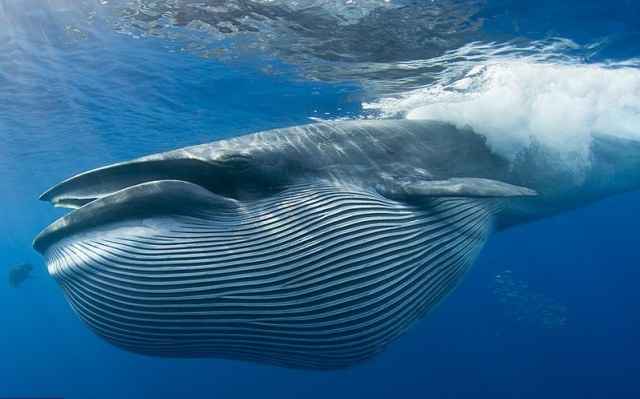
– As mammals, whales are also warm-blooded, so they maintain a body temperature similar to that of humans. While in cold water, whales maintain their temperature with a thick layer of fat located directly under the skin. It also protects internal organs from hypothermia.
The life of whales
– Whales and cetaceans move through the water with the help of their tails, moving them upwards and downwards vertically. This is how they differ from fish, moving their fins in different directions while swimming.
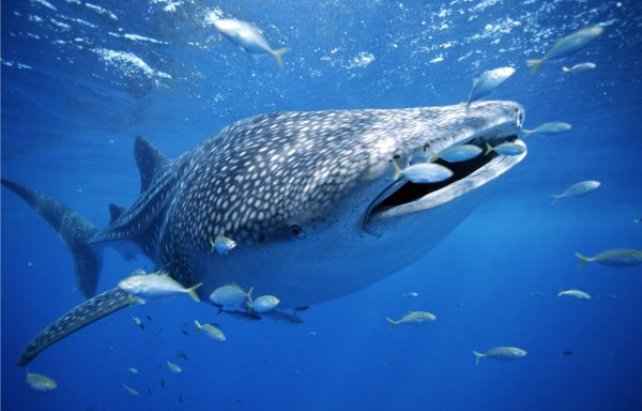
– The blue whale is the largest of all whales. It is considered to be the largest animal that has ever existed on earth. An adult blue whale can reach a length of up to 33 meters and weigh more than 200 tons.
– Sperm whales can dive 3.5 kilometers under water, because their bodies have unique physiological characteristics for adaptation, allowing them to survive in the cold and withstand the strongest water pressure.
Being at such a depth, sperm whales restrict the functioning of all vital organs, including the brain.
For example, under such conditions, their heart beats at a maximum of 10 beats per minute in order to store oxygen, and they also compress their lungs so as not to feel the pressure of water.
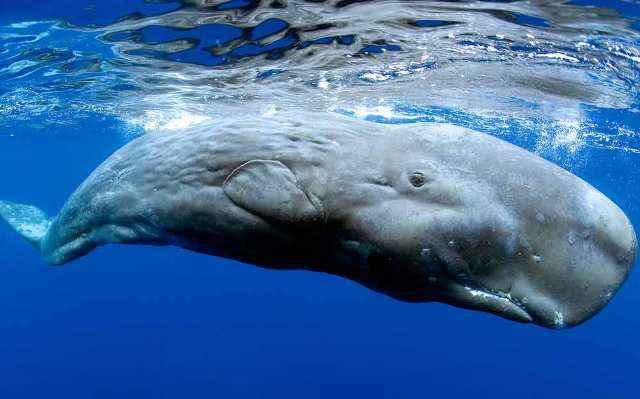
– Before deep-sea research vessels were created, the main source of information about the depths of the ocean was the analysis of sperm whale content.
– Whales don't drink seawater at all; they get liquid from food due to fat metabolism.
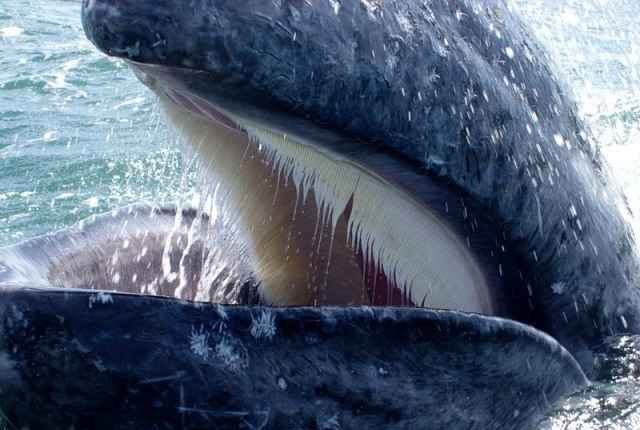
– Experts still don't know why whales love to jump out of the water so much. Biologists have suggested that this may be how they demonstrate their power to relatives, while ancient whalers believed that whales were teasing them in this way.
Interesting facts about whales
– Baleen whales use sonar to communicate with their own kind, emitting very low frequency sounds that travel over very long underwater distances. These sounds are considered to be the loudest natural noises in the animal kingdom.
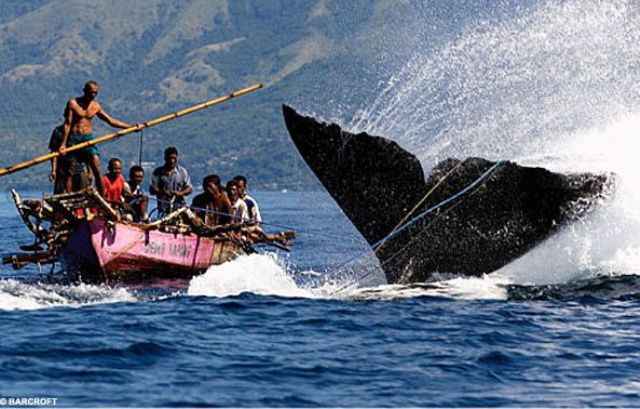
– Whales have no enemies among animals due to their incredible size. Their only enemy is the people who have been hunting them for meat and other raw materials for thousands of years.
– Hearing is the main way whales orient themselves underwater, so their eyes are extremely small in relation to their overall body proportions.
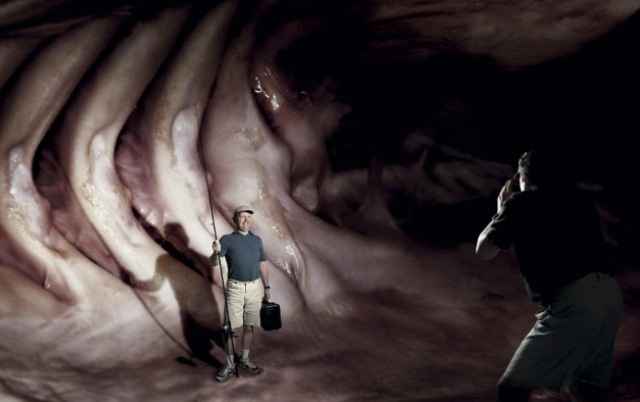
– Many world cultures have legends about how whales and sperm whales saved the lives of sailors. According to one such legend, whale fisherman James Bartley accidentally fell overboard his ship in 1891 and was swallowed by a sperm whale.
However, the man survived, despite spending an hour in the stomach of this amazing creature, until his comrades helped him.
Experts say this story is a fiction because, in their opinion, a person is unable to stay in a whale's stomach for more than a few minutes.
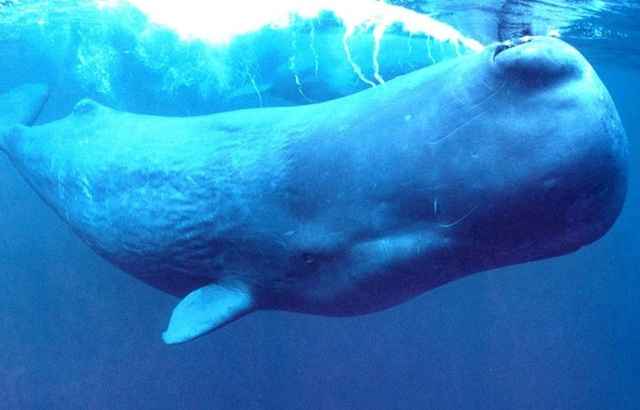
– Sperm whales were very valuable during the whaling era. And all because they have a unique organ — spermacet, located under the forehead of a huge animal. This bag contains about 2,000 liters of wax-like spermacet oil, which is still actively used in medicine and cosmetology.
– The height of whaling dates back to the late 19th and early 20th centuries. During this period, a huge number of whales were killed, and baleen whales were especially in demand.
This has made itself felt, so today the population of these animals is extremely small. Of the 11 known species of baleen whales, at least 9 are endangered.
– 1986 is the year of the declaration of a moratorium on whaling. Only a few countries practice it today.
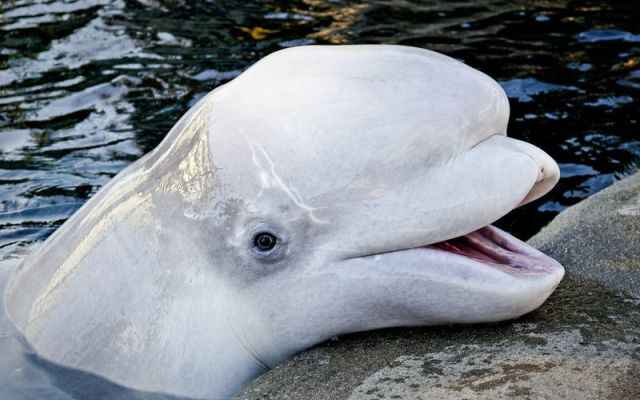
– Beluga whales are the only cetaceans that express emotions through facial expressions. They know how to “smile” and “frown” due to the structure of their lips and the fat on their foreheads.
– Orcas are the fastest among cetaceans. They can swim at speeds up to 60 km/h. Only swordfish, marlin, tuna and sailboat are faster than them.
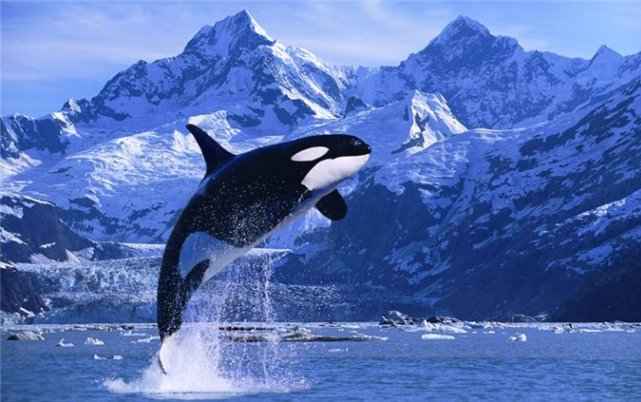
– All orcas have white spots on their black skin. Almost every individual has them unique, so they can distinguish each other even when swimming in muddy water.
– Gray whales used to be called “sea devils” during whaling because of the cruelty with which a newly born female protected her babies. Whalers often managed to kill young cubs, their mother took revenge and turned boats over.
– The blue whale, despite weighing more than 200 tons, consumes only small crustaceans. The main weight is gained during feeding. As a rule, a kitten gains more than 100 kilograms every day during the first three weeks of life.
– In the 15th and 16th centuries, the fangs of a toothed whale were passed off as unicorn horns, and they cost 4 times more than gold.
– Biologists say that blue whales have a lifespan equal to that of humans. But still, some individuals are so elusive that it is sometimes difficult to track them down. The oldest known whale to science was filmed in 1970 and then again in 2008.