
 Ecology
The continuous buzz of engines throughout commercial maritime trade routes not only causes whales to change their behavior, but affects the largest marine mammals physically, causing them chronic stress, as scientists discovered after research.
Scientists said that they were helped to study this phenomenon by an event that, at first glance, has nothing to do with cetaceans at all, namely the disaster that occurred in New York on September 11, 2011. This event forced the suspension of the movement of ships for some time, and scientists have been able to measure the impact of various levels of noise pollution in the ocean.
Over the past 50 years, the noise of cargo and warships, as well as the high-pitched sounds of sonar sonars, have gradually increased in intensity and scale. Toothless whales communicate using low-frequency sound waves, just like those sent by these vessels: between 20 and 200 Hertz. Some species of whales have adapted to send louder acoustic signals.
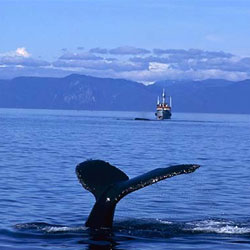
Scientists led by Rosalind Rolland, an employee of the New England Aquarium, attempted to study North Atlantic bowhead whales that gathered in late summer in Fundy Bay, Canada, in search of food and for feeding offspring.
Starting in July 2001, researchers, using specially trained dogs, began to search for the faecal matter of whales swimming on the water surface. They collected samples for six weeks each year until 2005.
Whale feces contained chemicals called glucocorticoid hormones, which reflect stress levels that varied from day to day and could also change within a few hours.
When scientists noted a decrease in noise in the waters where whales lived, they realized that it was a good opportunity to study whether noise pollution affects whales by causing them stress. As a result of research, scientists came to the conclusion that the concentration of stress hormone decreased with a sharp decrease in the noise produced by sea transport in the area.
“As we know, no other factors could explain this difference in the amount of hormones in whales, except for a decrease in the number of sea transport,” the scientists concluded.
Glucocorticoids are produced in animals during a crisis: aggression from predators or rivals, famine, drought, and so on. The release of a small amount of the hormone helps animals use their reserve energy.
However, a constantly high level of the hormone due to chronic stress begins to cause harm, leads to a delay in development, weakens the immune system and jeopardizes the ability to reproduce.
Studies of terrestrial animals have shown that this type of chronic stress can be caused by the noise of snowmobiles, cars on highways and other noises made by humans.
Due to the fact that North Atlantic whales live, feed and care for their offspring close to the coast, they are in serious danger from colliding with vessels or getting caught in fishing nets that lead to the death of whales.
“Acoustic pollution produced by anthropogenic sources is not so noticeable, but a serious reason for concern about the fate of whales, as noise has negative effects the consequences for these animals threaten the health of the population, “the scientists said.