
 Ecology
Basic:
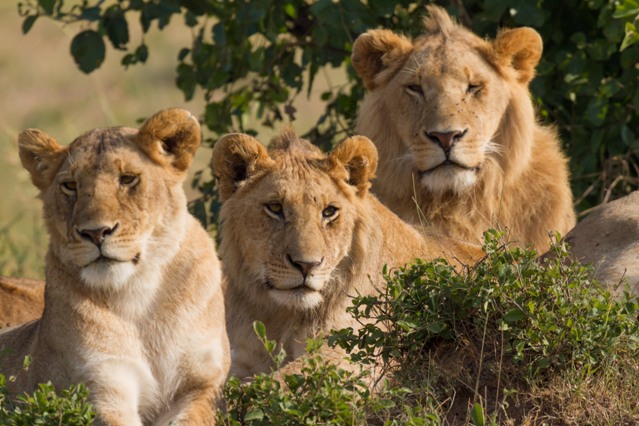
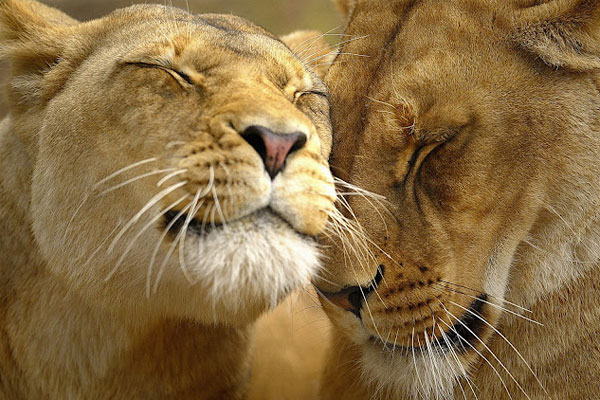
Known for being almost the only truly social cats, lions prefer to be nomadic and live in groups called prides, and leadership in these groups is It is mainly owned by females.
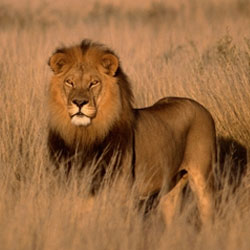
Lions have golden fur, and males have a shaggy mane that ranges in color from light to reddish or even black. The color of the coat depends on the lion's age, genetics, and hormone levels.
Adult male lions can reach a length of up to 3 meters and usually weigh between 150 and 250 kilograms, while females are slightly smaller — a maximum of 2.7 meters in length and weigh about 120-180 kilograms. The lion's tail can reach a length of 0.6-1 meters. Asian lions are slightly smaller than African lions.
The lion's body is ideally suited for hunting: they are strong and fit, and have powerful front legs and jaws that help them kill their prey.
Lions mainly feed on large animals, such as zebras and wildebeest. They do not hesitate to take prey from other predators — hyenas and leopards. Females are the most important pride hunters.
Lionesses mate every 2 years and can give birth to 1 to 6 cubs at once 3.5 months after conception. About 60 to 70 percent of lion cubs die in their first year of life. Pride females help each other care for their offspring.
In the wild, male lions live an average of 12 years, while females live 15 years. Lions can live longer in the zoo, more than 20 years.
Up to 40 lions can live in a pride, including adult females, teenage lions (2-4 years), and 1-2 adult males. Females stay in their mother's pride for life unless food shortages cause the pride to split. Males are kicked out of pride when they grow old in order to compete with younger rivals.
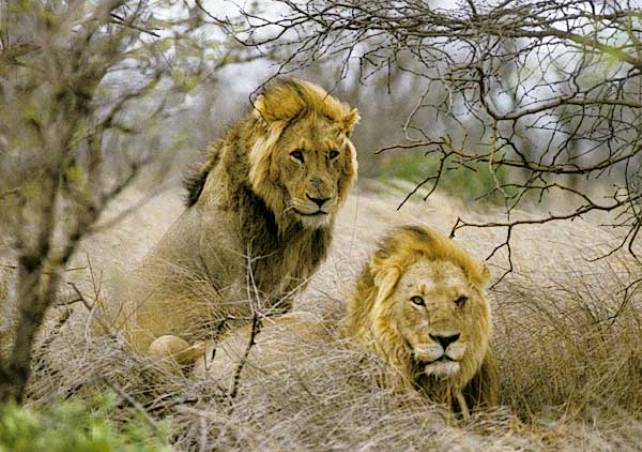
Males first travel with the whole group, which consists of his relatives, and then look for another pride to go to. Usually, males live in the same pride for 2-3 years.
Males and females mark their territories with urine, and also drive away rivals with their formidable roar.
Where do they live?
Lions used to be found all over Europe, Africa and North America, but today they are found mostly in Africa, from the southern edge of the Sahara Desert to northern South Africa. The habitat is savannas.
A small population of lions – about 300 individuals – lives in the Hyre Forest in western India.
Conservation status: African lion is vulnerable, Asian lion is on the verge of extinction
Lion populations suffer because humans hunt them and take territory from animals, and lions are threatened by diseases that can be transmitted from domestic dogs from neighboring villages.
Over the past two decades, the lion population in Africa has been halved for various reasons, including punitive measures by farmers: lions attack livestock.
Human intervention in the habitat of Asian lions has endangered their populations in the Hyres Forest.
Interesting facts:
— The closest relatives of lions are tigers, with whom lions can interbreed in captivity. As a result, hybrids of these cats — ligers and tigers — are born.
— Lions are the second largest cat in size (after tigers).
— The menacing roar of a lion can be heard 8 kilometers away in the savanna.
— The lion's mane helps the lion defend himself during fights.
— Lions can reach speeds of up to 80 kilometers per hour, chasing prey, although they can travel short distances. The lion's jump reaches 11 meters.
— Asian lions have a rarer mane than their African relatives, and they have a characteristic skin fold on their abdomen. African lion ears are hidden in their manes, while Asian lions have ears sticking out of their manes.
— During the mating season, lions can mate 20-40 times a day.