
 Useful tips
Contents:
8 steps to help improve your handwriting
5 reasons to improve handwriting
Is your handwriting awful? Moreover, so terrible that you can't make out what you even wrote without a special examination?
“So that's not my problem!” – many of those who write like chicken with a paw can answer this.
In that case, this article is not for them, but for those who are concerned about the fact that no one can read their letter. And we have great news for the latter.
Even if you've forgotten how to write legibly, or your handwriting has never been legible, there are a number of measures to make it quite readable within a relatively short time handwriting.
8 steps to improve your handwriting
1. Choose the right “weapon”

Shiffti/Getty Images
Such a writer, Edward Bulwer-Lytton, lived in England in the 9th century, whose works, by the way, have been translated into Russian for 150 years. So he once said that “a pen is stronger than a blade.” This statement can be interpreted in different ways, but, most likely, the writer hinted at the power of the word that comes out of the author's pen.
Be that as it may, even experienced warriors are unlikely to perform real feats in battle with a rusty and blunt blade (sword, rapier, sword or other piercing and cutting weapon). Therefore, you can't expect a result in the form of a neat calligraphically written text if you have an old ballpoint pen with a gnawed cap in your hands either.
Read also: How to write to be read: 15 practical tips for beginners
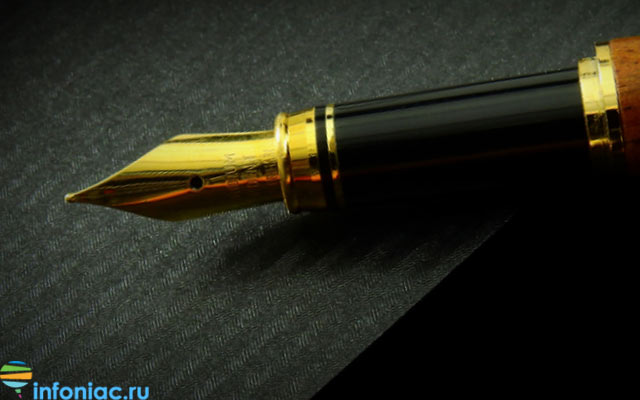
However, you should not go from extreme to extreme: there is no need for a gold-encrusted fountain pen (a la Pilot or Parker) with a gemstone
ballpoint (isn't it) that you are supposed to use only such writing tools by status!).
Pixabay/Pexels
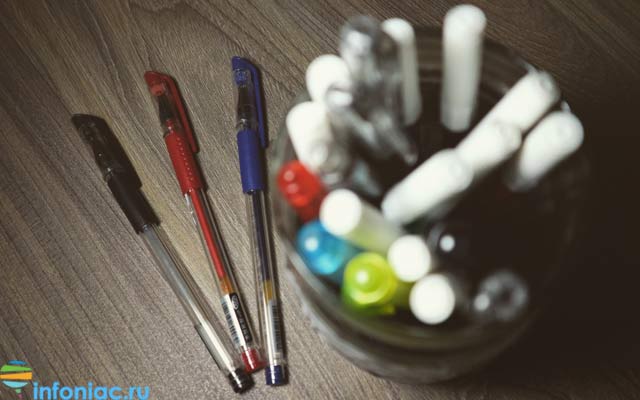
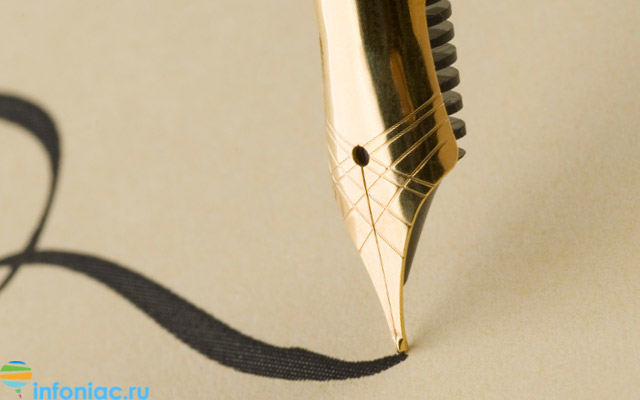
Fortunately, the market now offers a wide range of writing instruments — from fountain and ballpoint pens to gel pens and even pens that use biopolymer ink pastes. Only you can choose the most convenient pen for you by trying each of them. Stop by the stationery store and spend the necessary amount of time there to choose the right “weapon”.
Why is it important to choose a good pen?
The fact is that even a very good ballpoint pen can, as they say, mess: its paste is filled with oily ink with a very thick consistency, so these pens sometimes simply do not write if are not quite upright. If the room is cool, a ballpoint pen may also be bad at writing.
Gel pens provide smooth and smooth writing. Pens with bipolar ink, which are sometimes mistakenly called gel ink, are very convenient. Both write well
in cool rooms and outdoors, although the latter are still preferable. Try different pens, choosing the one you love to write with.
A pen that must be pressed hard to keep the ink on paper is not suitable for writing practice!
Pixabay/Pexels
Another important point is the thickness of the lines. Pay attention to which lines you have smoother, more beautiful for you personally, if you want. If the handwriting is more readable when writing with a pen that has a thin tip with a small ball (if it's a ballpoint pen), then use it.
If you're more comfortable writing more clearly with a pen that leaves thick, three-dimensional lines, then perfect your writing with this tool. And it is very important that you feel comfortable holding your writing instrument between your fingers! A thin handle, thick or medium thick, is all a matter of taste.
Many people think that it is very convenient to write with a pen that has three faces (this is convenient from the point of view of the fingers, which we will discuss below). If the pen body consists of more edges, it is likely that they will painfully press on the fingertips – it is difficult to write with such a pen for a long time. There are also handles with soft rubberized tips just where we hold it with our fingers.
Bich Tran/Pexels
By the way, even the color of the paste affects some people's handwriting. Toxic green ink or a blue color that is too faded can be annoying. But it's all up to your taste! If you are left-handed, then it is recommended to choose a pen that has been designed specifically for left-handed people. In other words, you should choose such a “weapon” so that you can enjoy using it.
2. Practice how you hold the pen
We assume that we are all adults who went to school and know how to hold a pen in our hand. However, there are also some nuances that you must have forgotten about. The pen should be wrapped so that it leaves clear marks on the paper without you putting too much pressure on it.
Should you bother if you're using the wrong fingers we were forced to use to hold the pen correctly? Most likely, you've been doing this since school. It is unlikely that you can be retrained, especially since you don't need to do this — the exact fingers you use to hold the pen is already a weak excuse for poor handwriting, since you are so used to writing. The main thing is that you feel comfortable holding it.

Catalin
And yet, how to hold the pen correctly?
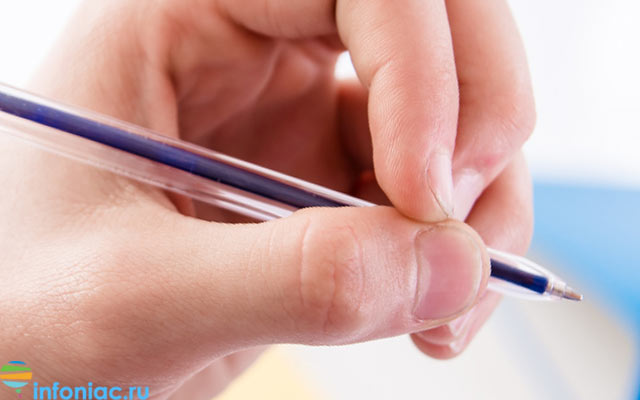
Many people should be reminded how to hold the pen correctly: to fix the writing instrument when writing, you need to use three fingers — thumb, index, middle. Each of these fingers has its own function. And if you keep it right from an early age, then chances are that your handwriting will be more or less readable (or even calligraphic!) , much more.
The function of the left side of the middle finger is to support the handle — the handle seems to lie on this finger. The index finger lies on the pen, fixing it from above, and the thumb fixes the writing instrument on the left (namely the pen, not the index finger!). Even the little finger, on the upper joint of which the hand rests during writing (as well as on the outer part of the palm), performs an important function.
In order not to make an effort when writing, the distance from the tip of the pen to the fingers should be about one and a half to two centimeters. The pen's inclination relative to the paper is about 45 degrees. At the same time, make sure that the reverse end of the handle is not too far away from the right shoulder. But you don't need to try to have it aimed at your right shoulder either — then your thumb will prevent you from seeing what you are writing.

4Maksym/Getty Images Pro
Many ballpoint pens write poorly enough if the angle of the pen itself is too sharp in relation to the table. Sometimes you have to keep it almost at an angle of 90 degrees so that the paste “flows out” evenly. However, this way of writing does not contribute to the formation of good handwriting, as we spend much more effort on the process itself.
Equally important for developing or practicing good handwriting is how the sheet of paper you are writing on is located. Its lower left corner should “look” you directly into the center of your chest, located about the same place. The angle of inclination of the sheet of paper in relation to the plane in which your body is located should be approximately 30 degrees.
Why a left-handed pen costs more
A left-handed writer always arouses unusual interest. Moreover, not so much because he holds the pen in his left hand, but because of EXACTLY HOW he holds it. The position looks rather unnatural, but it is not the fault of left-handed people. Nature has decreed that if a left-handed person holds the pen in his left hand in the same way as a right-handed person (only mirrored, of course), then he simply will not see the text that he puts on paper.
Michalludwiczak/Getty Images
We have already said that there are special handles for left-handed people (or rather, pens that have a special design). Such writing instruments allow left-handed people not to bend their arms in an unnatural way. However, the hand slides over the text and there is a risk of smudging the paste. Therefore, left-handed pens have not only a special design, but are also equipped with an ink paste that dries quickly when they hit paper. Needless to say, such a pen is much more expensive than right-handed pens?
3. Watch your posture
Do you think you've been constantly reminded at school of the importance of good posture solely for the prevention of scoliosis? But no! Proper posture also affects the legibility of your handwriting. Keep your back straight, but do not strain it. We have already talked about the positions of the fingers that do not hold the handle – they perform a supporting function with the little finger and the outer part of the palm lying on the table.
To spend less effort when writing, your desk should have enough space for your handwriting to be elegant and “free”. So off all sorts of coffee cups, calculators, laptops, folders and other kitchen and office paraphernalia!

Dekdoyjaidee/Getty Images
Free your desk from all that's superfluous so you can put a sheet of paper away from you. How far is it? So that both elbows can rest on the table. You do not need to rest your chest on the table -, as they say, keep a distance (about two centimeters).
While writing a text, a hand moves across the table. The position of the body and its inclination remain the original. If writing becomes uncomfortable as you move your hand down the sheet, you don't need to change the body's inclination or bend your arm too much — instead, push the sheet away with your other hand.
4. Write from the shoulder
You have chosen a pen that suits you absolutely, learned how to hold it correctly, and adapted to the necessary posture. So why do you end up with jumping handwriting and your hand getting so tired that it cramps? The point is most likely that while writing, you are actively moving your hand in relation to your forearm.
The hand should form a fixed tandem with the forearm. In other words, the hand should not bend. And it is necessary to move a pen or pen on paper with a special movement, moving this tandem with the help of a specific shoulder movement. Movement is like pushing something away from you with the outer part of your hand.

Billion Photos
So, the fingers and hand should remain in their original position. This contributes to the fact that the handwriting is more fluent, but at the same time it remains quite readable. Moving your hand correctly across a piece of paper requires some practice. You will be tempted to bend your brush when writing, as you used to do before. However, you will feel that your hand and fingers are almost never tired when writing like this. And the shoulder muscles do not feel the load.
If you find it difficult to understand what to move and what not to move when writing, pick up a pen and pretend to write in the air, just like you wrote on a blackboard in the past. And then you will notice that your hand is completely motionless in relation to your forearm, and the movement is as if from your shoulder. We also need the same movement when writing on paper on a desk.
5. There's no need to hurry!
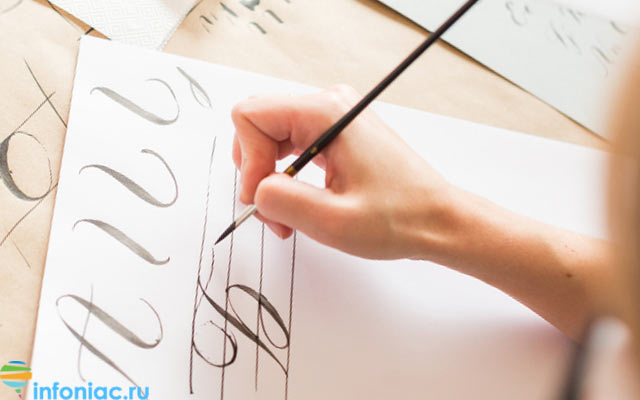
How do graphologists (that is, handwriting specialists) manage to distinguish between what one person has written and what is written by hundreds or even thousands of others? The fact is that many of the nuances of writing are formed in childhood, after which they remain unchanged throughout life.
Melnikof/Getty Images Pro
This does not mean that it is impossible to change the handwriting. This only means that you are unlikely to be able to combine letters together in any other way than you are used to writing fluently, or completely change the writing style of some individual letters and symbols. Of course, if you devote months or even years of training to this, then chances are that you will make your handwriting completely unrecognizable to a layman who decides to compare it to that handwriting that you had before.
But it is quite difficult to deceive a serious graphological examination. The formed handwriting usually remains the same because it happens at the reflex level. The good news is that this reflex is conditional, that is, acquired. This means you need to learn other skills now. The secret is that writing skills aren't quickly acquired. Practice is the basis of everything!
Before you get used to writing more beautifully at a fast pace, work on rebuilding basic writing skills. In other words, learn to reconnect letters, just do it as you should, guided by well-known writing rules (yes, take the time to find a regular school writing textbook — download from The Internet, after all).
6. Start with simple things
Ralf Geithe/Getty Images Pro
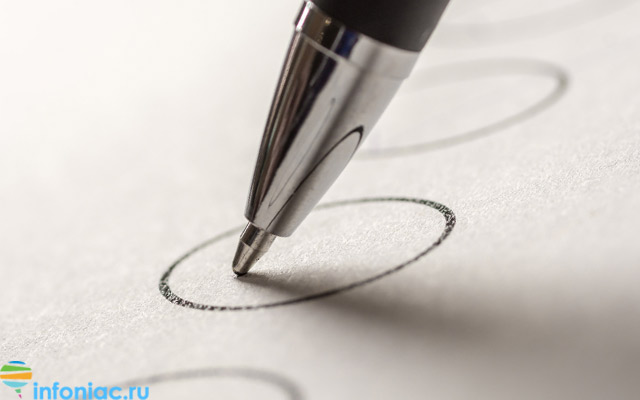
If you remember, everyone in elementary school (and many in preschool age) started by writing lots of pages with all sorts of dashes, circles and other squiggles. Since this did not help you form beautiful handwriting during your wonderful school years, it is recommended that you return to this simple task again.
I would like to believe that this time no one will drop abundant tears on a sheet of paper, bringing out hated figures!
Start with the simplest: lines. Write several pages with vertical lines and then horizontal lines. Make sure that the lines are even, have the same length and are parallel to each other. Work on this exercise until you feel that you automatically get the lines you need.
7. Work on bugs
If you have to write a lot during the day, then you have a lot of material to work on your mistakes. In particular, pay attention to characters that may be difficult for you. For example, you can't properly maintain the spacing between letters. Or you have some letters “dance”, “fall” and so on.

ICantar
First, pay special attention to one of your mistakes. Now when you're writing, try to focus on correcting this particular error. If you have a lot of mistakes, don't try to focus on everything at once while writing — then you'll be writing very slowly. Work on one mistake first, automate the correct spelling, and then move on to the other.
As your handwriting really improves, you can add some twist to your own writing style, such as rounding off the bottom of the lowercase “r” or the upper part part of the lowercase letter “c” and so on. These little “pranks” will make your writing style more personal and more pleasant to write. It will not be superfluous if you start decorating capital letters with monograms (just don't overdo it — the text should be legible!).
8. Don't miss out on the opportunity to write by hand
If there is even the slightest opportunity to write something by hand, do not miss it and write, write, write… If you are going to the store, write the list by hand. Not on a piece of paper, standing and a stump of pencil, but on a normal sheet, complying with the conditions that were proposed for practicing good handwriting above. Even if you have a great memory, write a list, don't be lazy.

Southtownboy/Getty Images Pro
Get yourself a regular diary in which you can write down your plans for the near future every day. Don't shorten, write in full. If you rarely need to write something, but you want to improve your handwriting (for example, so you don't feel ashamed of your own school-age children who write more legibly you!) , keep a handwritten diary.
The benefits will be double – and there is an opportunity to work out handwriting and work out introspection.
Comparative analysis of texts written by your hand at different periods of time will bring real benefits. Compare, for example, how you write today to how you wrote a week ago; two weeks ago, and so on. If you train regularly, then progress will be obvious. This means that you will see firsthand the results of your work. What could be better and more effective to be inspired to further improve by your own successes?
It is also recommended that you ask someone you know who has excellent handwriting to write a few lines on a piece of paper that you should always keep in sight when, for example, stay at your workplace in the office or even at home. Don't download some hypothetical person's calligraphic text from the Internet! May you always have a real life example in front of your eyes that will stimulate you in your desire to write more beautifully.

Pixabay/Pexels
If reading the exercises described above did not discourage you from spending some time and improving your handwriting, good luck. If you suddenly change your mind about this issue… Well, let you be comforted by the fact that many famous historical figures (for example, Freud and even Napoleon) had a simple horrifying handwriting!
5 reasons to improve your handwriting
Actually, this is an idle question. Working on improving writing is not a case when your approach depends on your ultimate goal. In other words, it doesn't matter at all:
· Do you need calligraphic handwriting;
· Would you like to improve your writing at least slightly?
In fact, a lot of people pick up a pen these days just to sign something. Another thing is people of those specialties who often have to write by hand rather than type text on a computer. And if you personally write by hand quite often, but are extremely dissatisfied with your handwriting, you, with some effort, have every chance to correct it.

Visivasnc/Getty Images Pro
As a rule, people in certain professions — for example, medical professionals, teachers, lawyers, and so on — have to write with their hands the most. And for many of them (especially doctors!) the handwriting is so disgusting that they probably can't understand anything from the list of products they made for themselves a few hours ago for an evening trip to the grocery store.
Many people often do not have to write explanatory notes, statements, orders, etc. on computers…
In general, everyone has their own motivation, that is, the reasons why a person may want to improve their handwriting. But the approaches and principles for correcting handwriting (even one that looks like the footprints of a spider randomly moving across paper that has just escaped from an inkwell) will be the same for everyone. But let's get back to motivation…
1. Writing by hand makes you smarter
And this is not an empty statement! The results of a study (link at the end of the article) published in the American daily newspaper The Wall Street Journal show that writing by hand improves overall people's ability to learn.

halfpoint collection
As part of a study conducted by specialists from Indiana University, Indiana, USA, indicators of neural activity in the brain of children aged four and five were taken. The children were then divided into two groups. Each group of children was worked on for a certain period of time, teaching them letters and how to distinguish them. But in one group, children were also taught writing skills.
The brain activity of children from two different groups, filmed after this experiment, was radically different! Those children who were taught not only to distinguish letters, but also to write them, the activity of neural connections in the corresponding areas was almost close to the activity of such connections in adults.
According to scientists, drawing two-dimensional drawings (letters can also be considered two-dimensional drawings!) helps to improve the ability to absorb information. And this applies not only to children — there are other similar studies that have recorded an improvement in brain activity in adults after a period of practicing handwriting.
GVictoria/Getty Images Pro
Moreover, some of these studies have found benefits for various cognitive processes in those who practiced so-called fluent writing. It is noteworthy that writing printed letters gave much more modest results. Of course, writing alone doesn't make us smarter. But working on the development of calligraphic handwriting can stimulate brain activity.
2. Pen and paper are in many cases more convenient than a computer
You can even record the necessary information on a regular smartphone, not to mention if you have a laptop at hand and the right conditions for using it. However, try to sketch out a certain amount of text with your smartphone in a short period of time!
There is no doubt that if you organize a competition between someone who will write text on a smartphone and someone who writes by hand on paper, the second person will finish writing much earlier and write much more. By the way, have you noticed that at various official events or just during interviews, many journalists take notes in a regular notebook with an ordinary pen?

Poike/Getty Images Pro
And people go to meetings in the vast majority of companies with a pen and a notebook (or a sheet of paper). After all, from the whole stream of words expressed by your superiors, you need to identify the main thoughts and have time to record them, which cannot be done quickly either with a smartphone or even with a computer ( and you can't bring it to the meeting).
3. Pen and paper don't need batteries
Some may find this argument far-fetched, but let's be serious: there are situations in life when incoming information can only be recorded with a pen and paper! Naturalists, archaeologists, geologists and many other worthy professionals always have a pen and notebook at hand to quickly write down their observations.
Of course, you can record important things on a recorder (again, batteries are needed!) , but then the information must be “pulled out”. And to do this, you need to… transfer it to paper or enter it into a computer, because it is more convenient to work with information in writing. But if the same geologist or archaeologist has handwriting as a real family doctor, then it will take a long time to decipher the records.
4. A handwritten message looks more personal

LibraKV/Getty Images Pro
Handwriting allows you to see a person's personality. To do this, you don't have to be a graphologist at all — it's enough to have at least some education and life experience. And if you want to impress someone by sending someone a personal invitation or an offer of cooperation, a competent handwritten text (literate and close to calligraphic) will get this person to you much faster than template printed letters.
Moreover, writing by hand allows you to convey your emotions that cannot be conveyed by typing text on a computer. Agree, it is more pleasant to receive the same greeting cards from your relatives, signed by hand. Such postcards exude natural warmth. What can I say — if you need to hand a note to the subject of your sighs with the words “I love you!” , it is unlikely that you will choose a computer to write this note!
After all, calligraphic text looks more beautiful than printed text. You may not find this argument convincing, but try to compare two texts: one in block letters and the other in italics. In any case, italics look more pleasant and aesthetically pleasing.
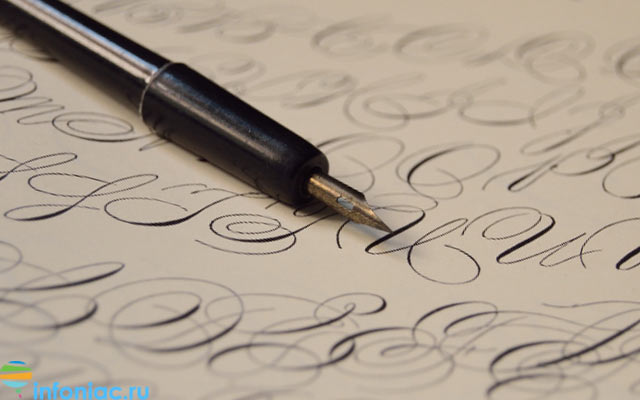
5. The ability to write beautifully by hand allows you to better understand other people's handwritten texts
Miguel A. Padrinan/Pexels
And this is absolutely logical! Many historians working with archival documents are forced to literally wade through the jungle of other people's handwriting who have long since sunk into oblivion. But not all of these people had the same calligraphic handwriting! The ability to write beautifully and legibly, as a result of many years of work on yourself, allows you to better understand other people's scribbles.
Read also: Test: Know your health by handwriting
And try to offer some more or less old manuscript to a person who, figuratively speaking, has not encountered any other spellings except for the letters of the Time New Roman font never! Such a person will not have enough nerves to understand what our grandfathers and great-grandfathers wrote there. Speaking of nerves: if you write a lot by hand and do it with pleasure and beauty, your nerves will almost certainly be much stronger than the nerves of a person who writes everything strictly on a computer.