
 Events
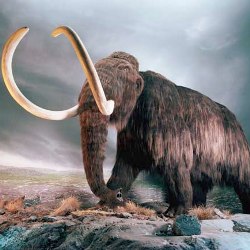
Russian and Korean scientists have signed an agreement on joint research aimed at reviving a woolly mammoth that last walked the earth 10,000 years ago.
The agreement was signed between Vasily Vasilyev, Vice Rector of the North-Eastern Federal University in the Republic of Sakha, and Korean cloning researcher Hwang Woo-Suk from Sooam Biotechnical Research Foundation in South Korea.
Stem cell researchers turned their attention to the possibility of cloning a woolly mammoth after global warming discovered the permafrost of Siberia the remains of these animals.
A Korean scientist said he is ready to begin work on cloning this year if a Russian university can transport the remains. The South Korean foundation said that they will transfer the technology to Russian scientists, which they have already begun to use in joint research with Japanese scientists, in an attempt to bring mammoths back to life.
The first and most difficult task will be to repair mammoth cells, which will require finding well-preserved tissues with intact genes.
Scientists will then replace elephant egg nuclei with mammoth somatic cell nuclei, and an embryo with mammoth DNA will be implanted into the elephant's uterus for birth. An Indian elephant will be used for this purpose.
Korean scientists have already cloned different animals, such as cows, cats, dogs, pigs and wolves, but cloning a mammoth is likely to be the most difficult task of all.