
 Science
One of the world's famous geneticists has announced that he can recreate Neanderthal DNA. For this purpose, we need a female volunteer to help give life to our long-extinct relative.
Professor George Church of Harvard Medical School announced that analysis of Neanderthal genetic code from bone samples is already complete enough to be able to restore his DNA.
Now the only thing to do is find a brave woman to give birth to a little caveman.
Cloning an ancient human species
The scientist plans to start by artificially creating Neanderthal DNA, based on the genetic code found in fossil remains. He will then put this DNA into stem cells.
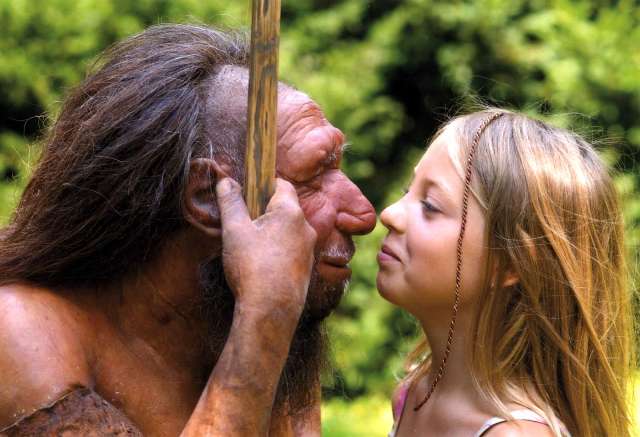
They will be injected into human embryo cells early in life. It is believed that stem cells will direct the development of a hybrid embryo through a Neanderthal rather than a human.
After the embryo has grown for several days in the laboratory, it is implanted into the surrogate mother's uterus.
Professor Church believes that the cloning of Neanderthals is for the benefit of humanity.

He also claims that Neanderthals were very intelligent.
“Neanderthals thought differently, and they may have been even smarter than us. When it comes to an epidemic or leaving the planet, their way of thinking can be useful to us,” explained the geneticist.
Although scientists believe that all this is theoretically possible, it is possible that neo-Neanderthals will not be immune to modern diseases to survive, and the process itself may lead to the development of defects.
The life and characteristics of Neanderthals
Neanderthals, as modern humans, belong to the group of primates, the genus Homo (Homo neanderthalensis).
They lived in Europe, the Middle East, and parts of western Asia about 500,000 to 30,000 years ago.
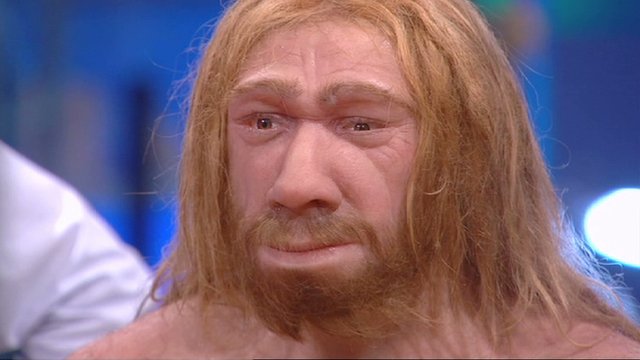
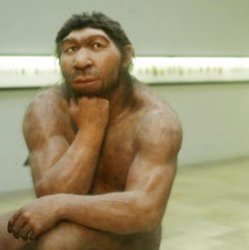
Anatomically, Neanderthals were shorter than modern humans, with thicker bones and stronger legs and arms. They had a low, sloping forehead, heavy brow arches, and virtually no chin. Their brains were slightly larger than modern humans.
Many people have the idea that Neanderthals were hairy, “brainless” savages. However, new findings have helped to redefine their image.
Lifestyle: Neanderthals had the beginnings of the same behaviors that made humans successful — using sophisticated tools, thinking abstractly, speaking, and making primitive objects arts. They were skilled hunters and lived in small families, interacting with neighbors
About 30,000 years ago, Neanderthals became extinct. At the same time, modern Cro-Magnon humans appeared about 40,000 years ago, creating a competition for resources in which the Neanderthals lost.
Did Neanderthals interbreed with modern humans? Scientists have found that a small fraction of Neanderthals remained in our DNA – about 1-4 percent of genetic material.