
 Science
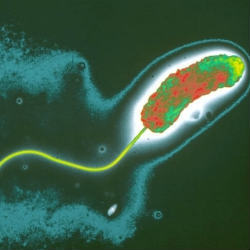
Despite the fact that cholera has long been known to mankind, scientists have only recently been able to understand exactly how cholera bacteria enter our digestive system, infecting millions and sending about 100,000 people around the world every year. The results of a recent study, according to scientists, can become the basis for creating more effective methods to combat vibrios, a genus of bacteria that cause cholera and enter our bodies along with contaminated food or water.
Toxins released by bacteria and causing severe diarrhea and dehydration can lead to death if the injured person does not receive timely medical attention. It is noteworthy that in order to colonize the human intestine, cholera bacteria have to cope with an almost impossible task — to do this, they must cope with trillions of other bacteria that already live in our digestive system. A team of British researchers from the University of York, led by biologist Gavin Thomas, has found that cholera bacteria overcome resistance other bacteria in our stomach with sialic acid, a type of sugar present on the surface of our gut cells.
Another scientist, American professor Fidelma Boyd from the University of Delaware, has previously proved that corroding the barrier in the form of sialic acid is the most important factor necessary for the survival of cholera bacteria in animals. But how exactly this acid is corroded and how vibrios are able to recognize it was still unknown. Researchers from York have been able to prove that pathogens that cause cholera use a specific diffusion mechanism called membrane transport, which allows transport sialic acid through the cell membrane into the cell.
This mechanism was discovered relatively recently. It has specific features and is extremely important for self-regulation and maintaining a constant cell composition. “This study helps us understand how the cholera bacterium that develops in our bodies uses sialic acid to survive. It will also help us direct our efforts in the necessary direction to create special chemicals that would hinder this process,” Gavin Thomas said.