
 Ecology
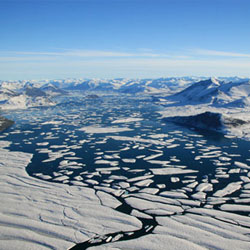
If we talk about the danger posed by Antarctic shelf ice, it turned out that the biggest problem comes from below, scientists recently found out.
By determining how the ice is disappearing, scientists will be able to predict what the continent will be like in the future, and will also be able to accurately answer the question of how much sea levels will rise.
Water or wind?
Scientists have long noticed that the broad ice platforms that extend around the southernmost continent are gradually disappearing. But what exactly causes glaciers to lose ice was not yet known for sure: was it some kind of warm current or winds that affected the ice?
Today, using satellite systems, it has been possible to find out that warm water is mainly to blame for everything. “We can't say that the ice layer in many places in Antarctica is thinning and disappearing as snow melts on its surface,” says one of the researchers, Hamish Pritchard, from UK Antarctic Authority. “The warm ocean current is eroding the ice from below.”
An international team of scientists has made final conclusions after carefully observing the ice from space. Using NASA's IceSat satellite, scientists have recorded how the ice layer in eastern and western Antarctica changes over time. In some areas, offshore ice became thinner by several meters each year. Based on this trend, according to Pritchard, at least 20 of the 54 ice platforms being monitored have already melted, mostly due to warm water under them, similar to warm water ice cubes dissolve in a glass.
Although scientists don't know exactly what makes the area get such warm water, they have suggested that conditions in the tropics that are too warm can cause strong winds that blow south in the side of Antarctica and warm currents drive with them.
Acceleration of ice rivers
The loss of shelf ice can pose serious problems due to the fact that the ice that forms off the coast of the continent acts as a kind of shutters and prevents the continent from losing ice so called ice rivers, which are located on the surface of Antarctica and move very slowly towards the ocean. If offshore ice begins to melt due to warm waters, mainly in western Antarctica, more of the continent's ice will flow into the ocean and melt, raising sea levels.
“Wherever the ice shelf disappears, the continent's icy rivers are accelerating,” Pritchard said. “The continent will thus lose its glacier, so sea levels will rise.”
The situation is somewhat different on the Antarctic Peninsula. In these areas, offshore ice is also undermined by warm winds, which cause snow to melt on the surface.