
 Science
On Tuesday, July 14, 2015, a historic event took place.
For the first time, the New Horizons spacecraft has begun orbiting Pluto, the last stop in our solar system.
New Horizons is the first spacecraft designed to study Pluto, and the information it gathers could rewrite the history of this dwarf planet, about which we know very little. .
Also Read: 12 Surprising Facts You Didn't Know About Pluto
New Horizons's mission is unique in many ways and even hides a few secrets.
New Horizons: Pluto News 2015
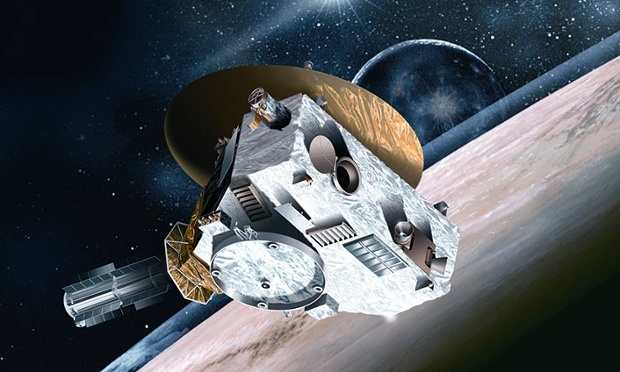
The spacecraft visited Pluto for the first time, traveling at 45,000 km per hour.
The maximum approach took place at 11:50 GMT (14:50 MSK) at a distance of 12,500 km from Pluto's surface.
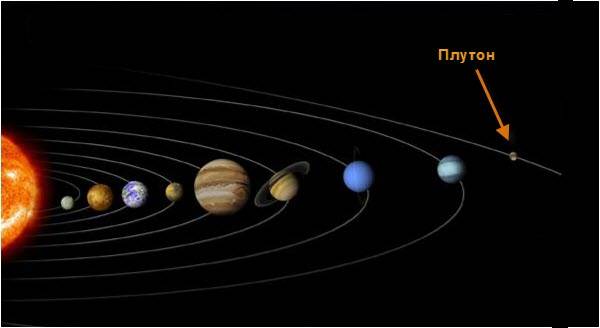
The New Horizons spacecraft will spend 8 minutes at the closest point to Pluto. Equipped with cameras and other instruments, it is programmed to collect data and photos not only of Pluto but also of its 5 smaller moons.
Read also: New Horizons: 10 interesting facts about the first mission to Pluto
There will be no contact with Earth at this time. At this distance, direct contact with Earth is impossible, as radio signals take more than 9 hours to travel from the spacecraft and back.
It will take 16 months to transfer all New Horizons data back to Earth, which will only happen in 2016.
Scientists will have to wait for news from the probe, which they will be able to contact the next day on Wednesday, when it will be known whether the spacecraft survived the flyby.
One of the dangers that the probe will face is dust particles from the cloud around Pluto, which could lead to the mission's collapse. But the probability of this happening is only 1 in 10,000.
Color images of Pluto
The New Horizons spacecraft was launched from Earth in January 2006.
A few months later, International Space Union astronomers changed their definition of the term “planet”, making Pluto a dwarf planet. The flyby could revive disputes and possibly restore Pluto's status as a planet.
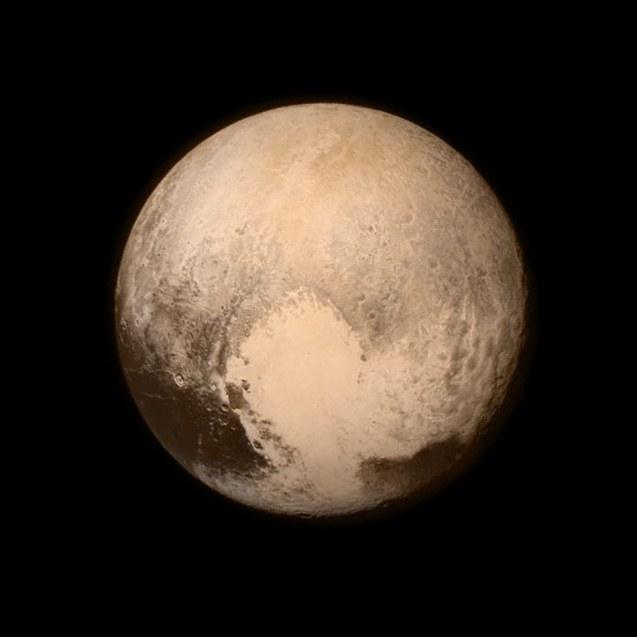
A few minutes before the historic flyby, NASA released the latest color photo of Pluto, taken from a distance of 768,000 km.
Planet Pluto: 7 new facts we've learned
Here are the first figures that have already come to light during the mission:
1. Pluto is red like Mars
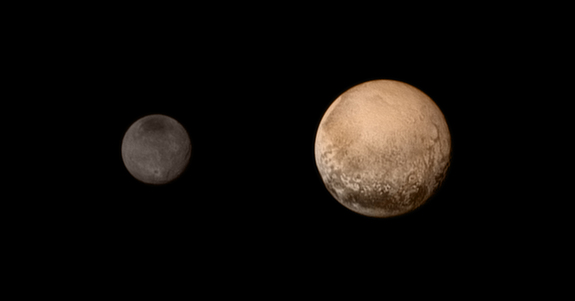
NASA has announced that Pluto is red like Mars. Space agency experts expected to see a dark gray icy planet, but saw Pluto in red-orange shades with a hint of valleys, mountains and craters.
2. Pluto is bigger than we thought.
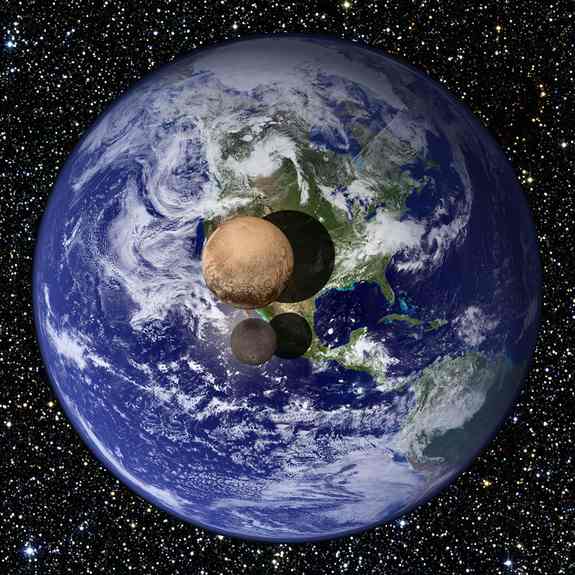
Comparing Pluto and its moon Charon to Earth
Other measurements by the probe have shown that Pluto is about 70 km larger than previously thought and has a diameter of 2,370 km. This means it contains more ice under the surface than expected.
3. Pluto is odorless
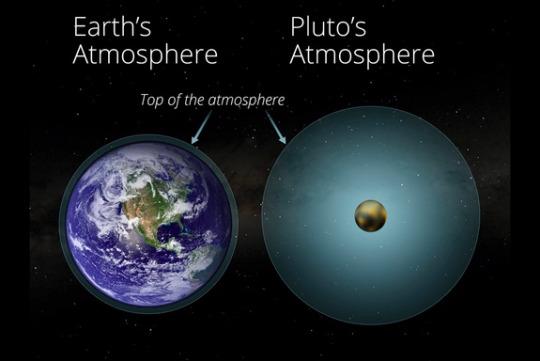
Scientists have confirmed that they have discovered nitrogen seeping from Pluto's atmosphere. Nitrogen appeared 4 days earlier than expected, which suggests that Pluto is losing its atmosphere faster than expected.
4. Pluto has a stylish ice cap
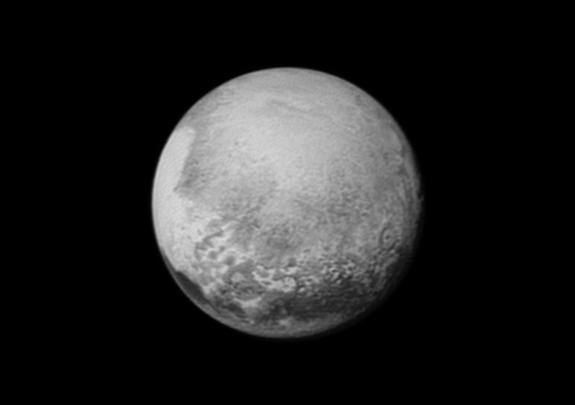
New Horizons has shown that Pluto's so-called polar cap consists of ice — frozen methane and nitrogen.
5. Pluto has a heart and a whale
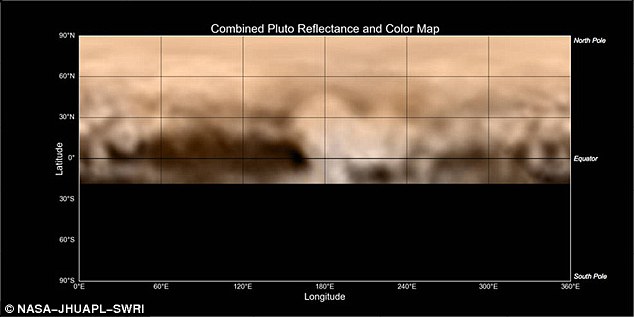
Among the geographical features seen on Pluto's surface were: the “whale” — a dark band along the equator with a “tail” and a heart-shaped structure.
6. Pluto has hills and craters
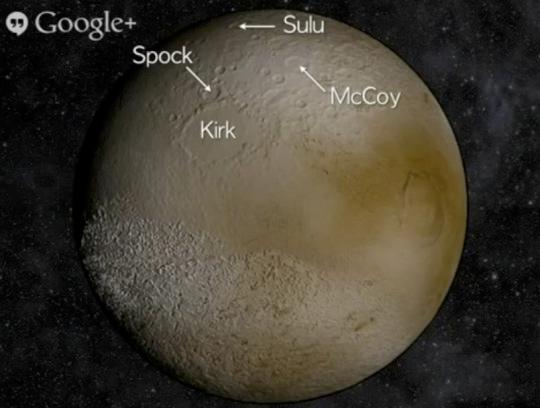
Some craters may be a sign of small objects colliding. Scientists even want to name Pluto's craters after the characters in the Star Trek movie.
7. Mysterious spots have been spotted on Pluto.
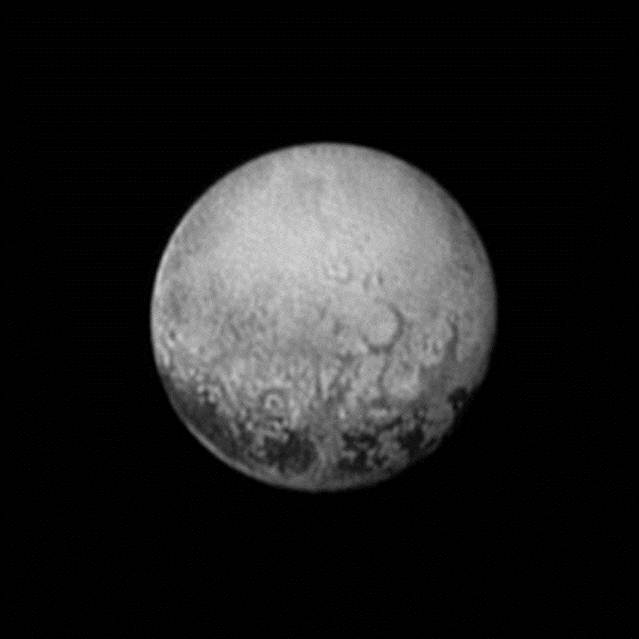
Scientists are trying to understand what's going on in the dark areas seen on one side of Pluto. The spots are arranged in size and location, reaching about 480 km in diameter.