
 Unbelievable facts
Human health directly affects each of us.
The media are full of stories about our health and bodies, from the development of new drugs to the discovery of unique surgical methods that give us hope disabled people.
Below we will tell you about the latest achievements of modern medicine.
Recent medical advances
10. Scientists have identified a new body part
Back in 1879, a French surgeon named Paul Segond described in one of his studies “pearly, stable fibrous tissue” running along ligaments in a person's knee.
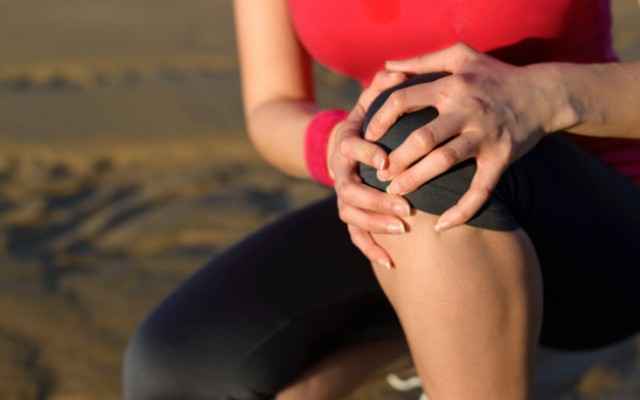
This study was safely forgotten until 2013, when scientists discovered the anterolateral ligament, a knee ligament that is often damaged when injuries and other problems occur.
Given how often a person's knee is scanned, the discovery was made very late. It is described in the journal Anatomy and published online in August 2013.
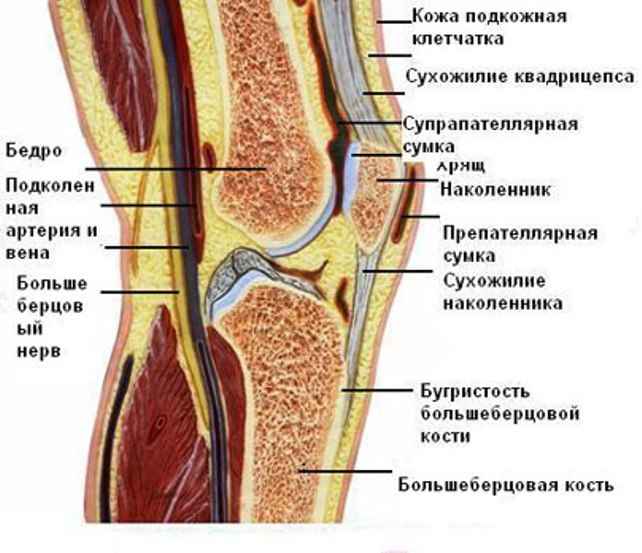
The authors of the study studied 41 pairs of knees and found a new ligament in all but one pair, concluding that the new body part is a clearly distinguishable tissue with its own calibrated structure.
Earlier this year, scientists published in the journal Ophthalmology the discovery of another new body part found in the eye. This is a microscopic layer of the cornea, which is called the “Dua layer”.
9. Brain-computer interface
Scientists working at Korea University and the German University of Technology have developed a new interface that allows the user to control the lower extremity exoskeleton.
It works by decoding specific brain signals. The results of the study were published in August 2015 in the journal Neural Engineering.
Read also: The strangest treatments in medical history
Participants in the experiment wore an electroencephalogram headdress and controlled the exoskeleton by simply looking at one of the five LEDs installed on the interface. This made the exoskeleton move forward, turn right or left, and sit or stand.
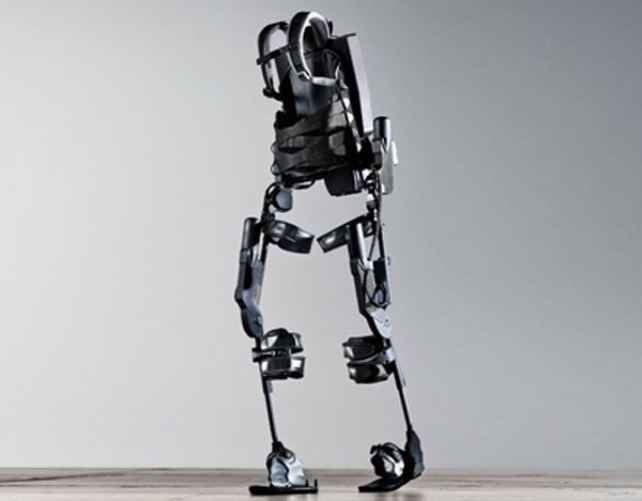
So far, the system has only been tested on healthy volunteers, but it is hoped that it will eventually be used to help people with disabilities.
Study co-author Klaus Muller explained that “people with amyotrophic lateral sclerosis or spinal cord injuries often have difficulty communicating and controlling their own limbs; decoding their brain signals by such a system offers a solution to both problems.”
Scientific achievements in medicine
8. A device that can move a paralyzed limb with the power of thought
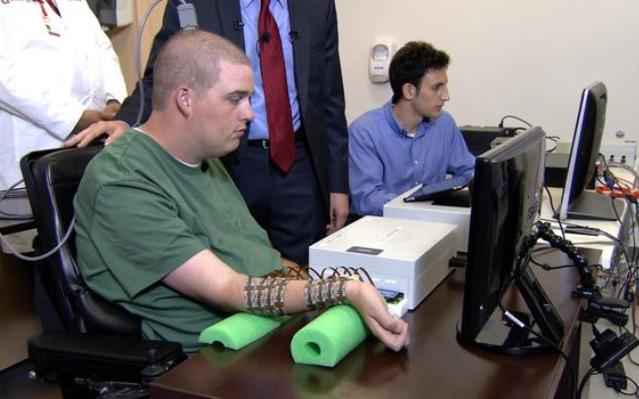
In 2010, Ian Burkhart became paralyzed when he broke his neck in a swimming pool accident. In 2013, thanks to the joint efforts of specialists from Ohio State University and Battell, a man became the first person in the world who can now bypass his spinal cord and move his limb, using only the power of thought.
The breakthrough came through the use of a new type of electronic nerve bypass, a pea-sized device that is implanted in the human motor cortex.
The chip interprets brain signals and sends them to a computer. The computer reads the signals and sends them to a special sleeve worn by the patient. Thus, the necessary muscles are activated.
The whole process takes a split second. However, to achieve this result, the team had to work hard. The team of technologists first found out the exact sequence of electrodes that allowed Burkhart to move his hand.
The man then had to undergo several months of therapy to restore atrophied muscles. The end result is that he can now rotate his hand, clench it into a fist, and feel what's in front of him.
7. A bacterium that feeds on nicotine and helps smokers quit the habit
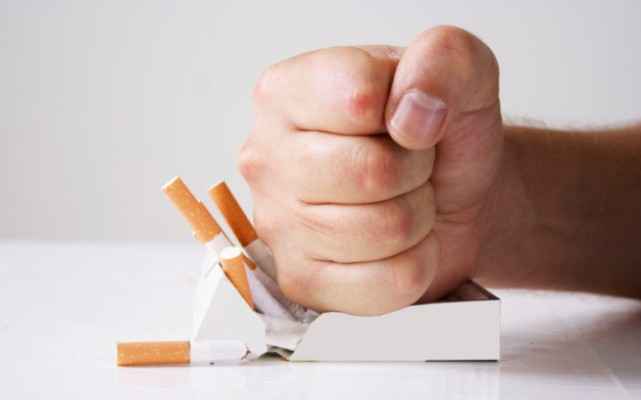
Quitting smoking is an extremely difficult task. Anyone who has tried to do this will confirm what has been said. Almost 80 percent of those who tried this with pharmacy products failed.
In 2015, scientists at the Scripps Research Institute are giving new hope to those who want to quit. They were able to identify a bacterial enzyme that eats nicotine before it even reaches the brain.
The enzyme belongs to the bacterium Pseudomonas putida. This enzyme is not a recent discovery, however, it has only recently been developed in the laboratory.
The researchers plan to use this enzyme to create new methods for quitting smoking. By blocking nicotine before it reaches the brain and triggers dopamine production, they hope they can discourage smokers from taking a cigarette in their mouth.
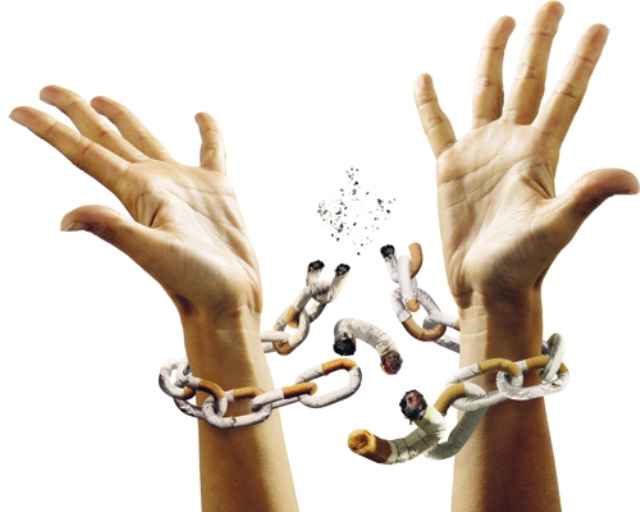
To become effective, any therapy must be stable enough without causing additional problems during activity. Currently, the enzyme produced under laboratory conditions is stable for more than three weeks while in a buffer solution.
Tests involving laboratory mice did not show any side effects. The researchers published their findings in the online version of the August issue of the American Chemical Society.
6. Universal flu vaccine
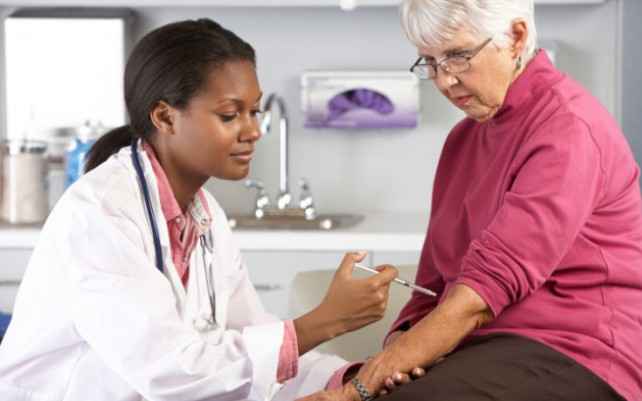
Peptides are short chains of amino acids that exist in the cellular structure. They act as the main building block for proteins. In 2012, scientists working at the University of Southampton, Oxford University and the Retroskin Virology Laboratory were able to identify a new set of peptides found in the influenza virus.
This could lead to the creation of a universal vaccine against all strains of the virus. The results were published in the journal Nature Medicine.
In the case of influenza, peptides on the outer surface of the virus mutate very quickly, making them almost inaccessible to vaccines and drugs. Newly discovered peptides live in the internal structure of the cell and mutate rather slowly.
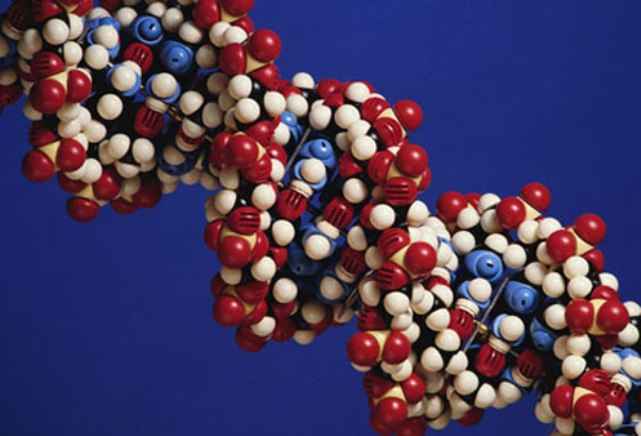
Moreover, these internal structures can be found in every strain of influenza, from classical to avian. It takes about six months to develop a modern flu vaccine, but it does not provide immunity for long.
However, it is possible, by focusing efforts on the work of internal peptides, to create a universal vaccine that will provide long-term protection.
Influenza is a viral disease of the upper respiratory tract that affects the nose, throat, and lungs. It can be deadly, especially if a child or elderly person is infected.
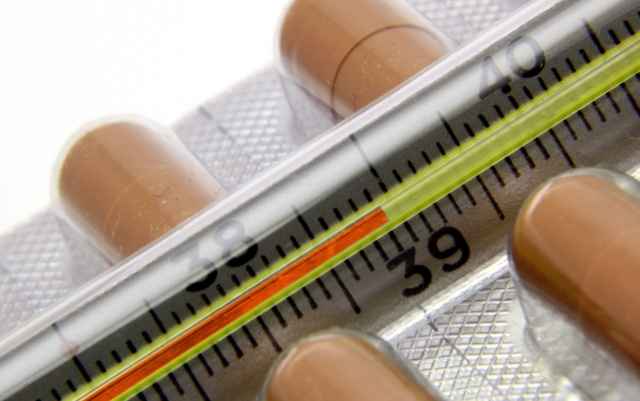
Influenza strains are responsible for several pandemics throughout history, the worst of which was the 1918 pandemic. No one knows for sure how many people died from the disease, but some estimates put 30-50 million people worldwide.
The latest medical achievements
5. Possible treatment for Parkinson's disease
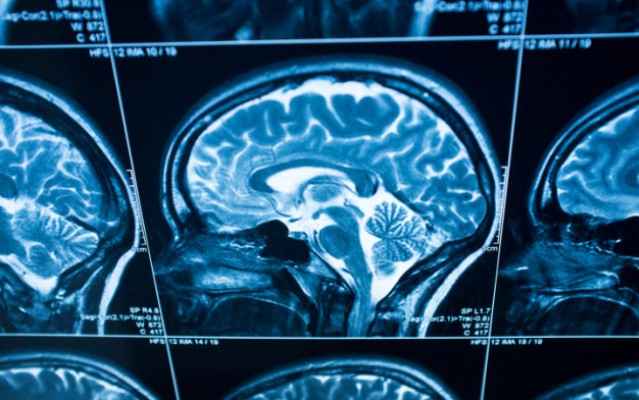
In 2014, scientists took artificial but fully functioning human neurons and successfully inoculated them into the brains of mice. Neurons have the potential to treat and even cure diseases like Parkinson's.
The neurons were created by a team of specialists from the Max Planck Institute, Münster University Hospital and Bielefeld University. Scientists have managed to create stable nerve tissue from neurons reprogrammed from skin cells.
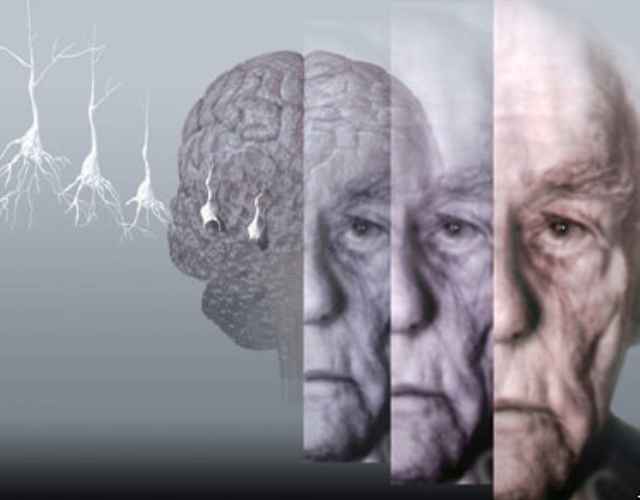
In other words, they induced neural stem cells. This is a method that increases the compatibility of new neurons. Six months later, the mice did not develop any side effects, and the implanted neurons were perfectly integrated into their brains.
The rodents demonstrated normal brain activity, which resulted in the formation of new synapses.
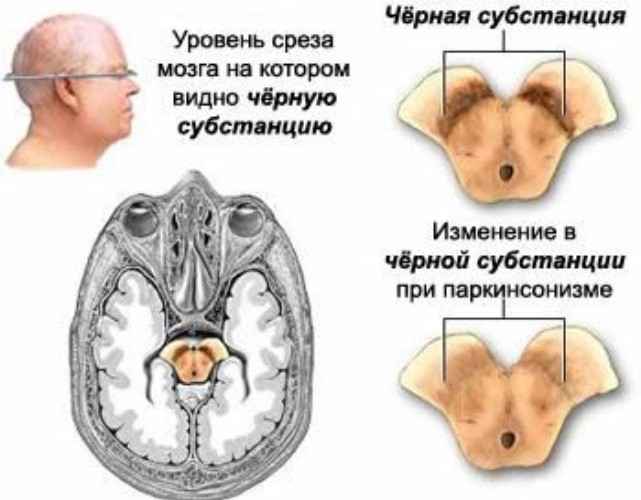
The new technique has the potential to enable neurologists to replace diseased, damaged neurons with healthy cells that could one day treat Parkinson's disease. It causes dopamine-supplying neurons to die.
Read also: 10 incredible medical miracle stories
To date, there is no cure for this disease, but the symptoms are treatable. The disease usually develops in people aged 50-60 years. At the same time, the muscles become stiff, changes in speech occur, gait changes and tremors appear.
4. The world's first bionic eye
Retinitis pigmentosa is the most common hereditary eye disease. It leads to partial loss of vision and often to complete blindness. Early symptoms include loss of night vision and difficulty with peripheral vision.
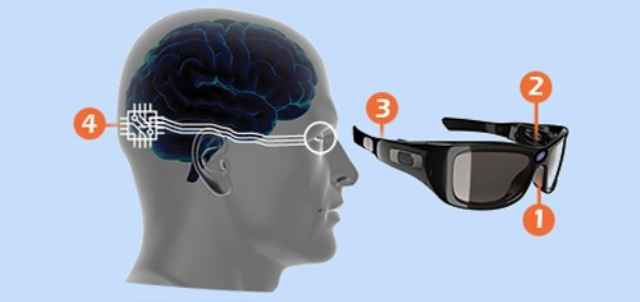
In 2013, the Argus II retinal prosthesis system was created, the world's first bionic eye designed to treat advanced retinitis pigmentosa.
The Argus II system is a pair of exterior windows equipped with a camera. The images are converted into electrical impulses that are transmitted to electrodes implanted in the patient's retina.
These images are perceived by the brain as patterns of light. A person learns to interpret these patterns, gradually restoring visual perception.
The Argus II system is currently only available in the US and Canada, but there are plans to deploy it worldwide.
New achievements in the field of medicine
3. A pain reliever that works only on light
Severe pain is traditionally treated with opioid drugs. The main drawback is that many of these drugs can be addictive, so they have a huge potential for abuse.
What if scientists could stop pain with nothing but light?
In April 2015, neurologists at Washington Medical School at St. Louis University announced that they had done so.

By combining a light-sensitive protein with opioid receptors in vitro, they were able to activate opioid receptors just like opiates do, but only with light.
They published the results of their experiments online in the journal Neuron.
It is hoped that experts will be able to develop ways to use light to relieve pain while using drugs with fewer side effects. According to research by Edward R. Siuda, it is likely that after additional experiments, light will completely replace drugs.
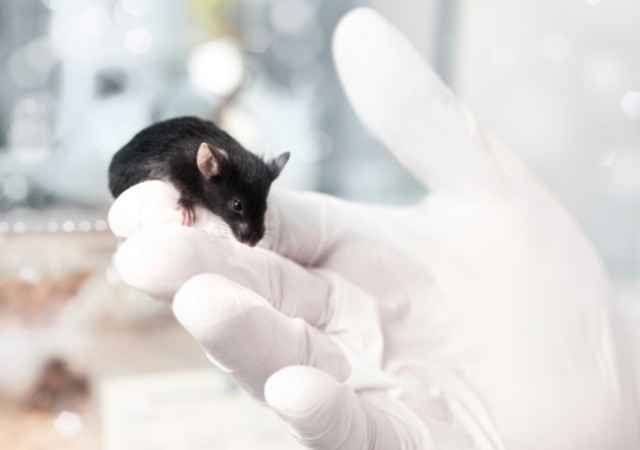
To test the new receptor, an LED chip about the size of a human hair was implanted in the mouse brain, which was then linked to the receptor. The mice were placed in a chamber where their receptors were stimulated to produce dopamine.
If the mice left the special designated area, the lights were turned off and the stimulation stopped. The rodents quickly returned to their place.
2. Artificial ribosomes
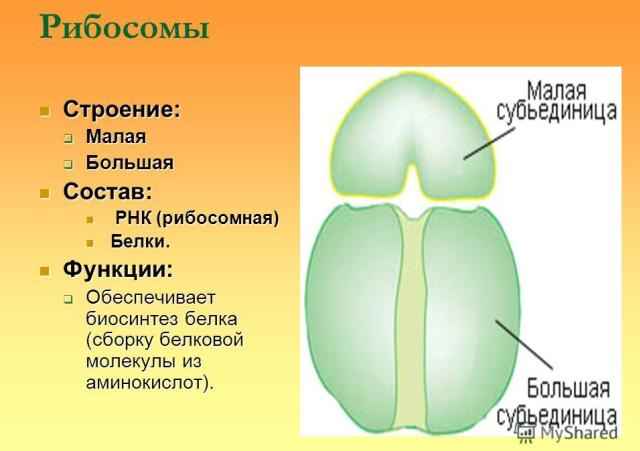
A ribosome is a molecular machine made up of two subunits that use amino acids from cells to make proteins.
Each of the ribosome subunits is synthesized in the cell nucleus and then exported to the cytoplasm.
In 2015, researchers Alexander Mankin and Michael Jewett were able to create the world's first artificial ribosome. Thanks to this, humanity has a chance to learn new details about the operation of this molecular machine.
Read also: What will medicine be like in 2020?
It will also be able to serve as a basis for the development of medicines and biological materials of the future.
Thus, Harvey became the first child in the world to undergo a bilateral hand transplant procedure. Currently, the boy needs daily immunosuppressants, and he is also undergoing physical therapy to restore the functionality of his hands as much as possible.
As with other organ donors, Harvey will be forced to take medications and therapy for the rest of his life to minimize the risk of rejection of donor tissue.