
 Science
Scientists say they have strong evidence for the existence of Planet X, the true ninth planet at the edge of our solar system.
The gas giant is 10 times more massive than Earth and orbits 20 times farther from the Sun than Neptune.
The planet is so far away that it takes about 10,000 to 20,000 years to orbit the Sun.
A new planet in the solar system
Researchers Konstantin Batygin and Mike Brown from the California Institute of Technology have found that a number of objects in the Kuiper Belt, a region of icy objects beyond Neptune – the orbits were extended in one direction.
Using mathematical and computer simulations, they came to the conclusion that the planet gave shape to these orbits.
Scientists say that the chances that this could be a mere coincidence are only 0.007%.
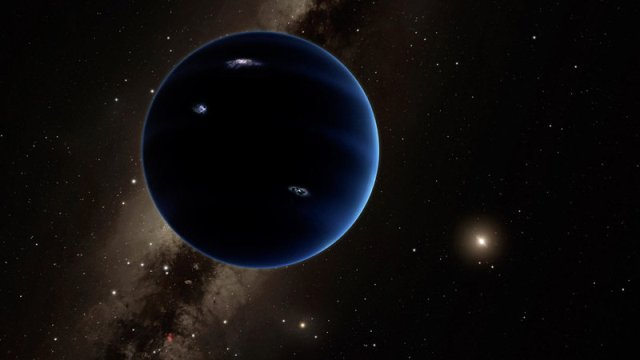
At an early stage in the formation of the Solar System about 4 billion years ago, a giant planet was kicked out of the planet-forming region near the Sun. It found itself in a distant elliptical orbit, where it is still located.
Only two planets have been discovered since ancient times, and this could be the third.
Read also: An impossible planet has been found – Mega-Earth
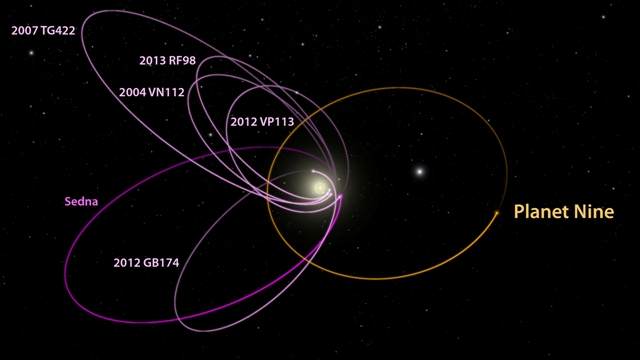
Planet X or Planet Nine
Researchers are confident that Planet Nine is big enough, and unlike Pluto, there will be no debate about whether it is a true planet.
If Planet X was able to stay inside the solar system, it had accumulated enough gas or ice to become a giant like Jupiter or Neptune.
So far, only the orbit is known, but not the exact location of the planet. If the planet is close to perihelion, it will be visible in photographs taken in previous studies.

If it's in the farthest part of its orbit, you'll need a large telescope, such as the Keck Observatory and the Subaru Telescope, located in Mauna Kea, Hawaii. If Planet Nine is somewhere between, many telescopes can try to find it.
However, the search for the planet could take 5 to 15 years, scientists say.
Why isn't Pluto a planet?
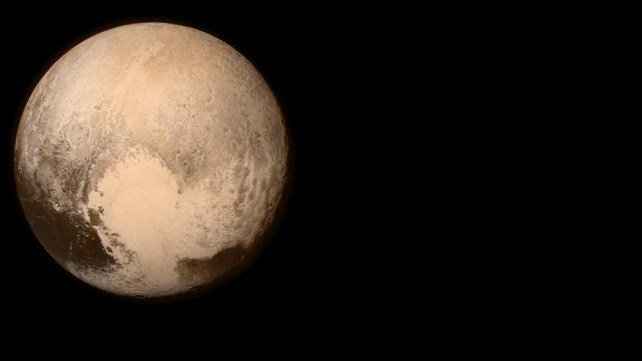
One of the scientists Mike Brown once participated in the exclusion of Pluto from the ranks of planets in our solar system.
Pluto was discovered by astronomer Clyde Tombaugh in 1930 and remained the ninth planet in the Solar System until 2006.
However, in 2006, the definition of a planet was revised, and Pluto no longer met that definition.
Also Read: 12 Surprising Facts You Didn't Know About Pluto
According to the new rules of the International Astronomical Union (IAU), a celestial body must meet the following criteria to be considered a planet:
· The planet must be round
· The planet must orbit around the Sun
· The planet must clear the surroundings of its orbit. This means that when a planet moves, gravity clears the space around it from other objects. Some of these objects may collide with the planet, others may become satellites.
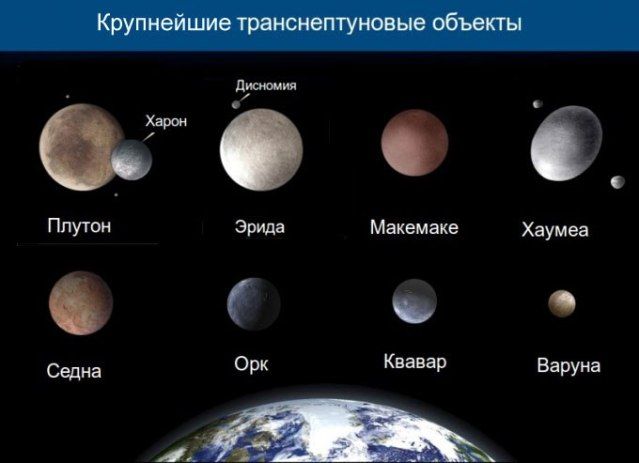
Pluto meets the first two criteria, but not the third. Pluto is only 0.07 times the mass of other objects in its orbit. By comparison, Earth is 1.7 million times the mass of other objects in its orbit.
Objects that do not meet the third criterion are dwarf planets, and Pluto is a dwarf planet. There are plenty of objects of similar size and mass around its orbit, and until Pluto collides with them and gains mass, it will remain a dwarf planet.
At the moment, five dwarf planets are known: Pluto, Makemake, Haumea, Eris, located outside Neptune. The fifth dwarf planet Ceres lies in the asteroid belt between Mars and Jupiter.