
 Ecology
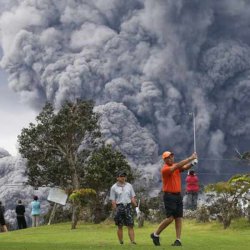
In 2018, scientists dared to predict the increase in volcanic activity on the planet, frightening ordinary people with catastrophic consequences in the form of global climate change and destruction cities and deaths.
Such bleak forecasts by experts are not unfounded: for many years now, there has been increasing volcanic activity along the Pacific Volcanic Ring of Fire, where There are more than three hundred active volcanoes.
The behavior of a couple of other active volcanoes, which have managed to ruin the lives of a significant number of people on our planet over the past ten or twenty years, is also alarming. But there are about nine hundred active volcanoes on land alone.
Volcanoes are an integral part of Earth that remind us how destructive nature's rage can be. We offer you a list of the ten most dangerous active volcanoes on our planet today.
Active volcanoes
Mauna Loa Volcano, Hawaii
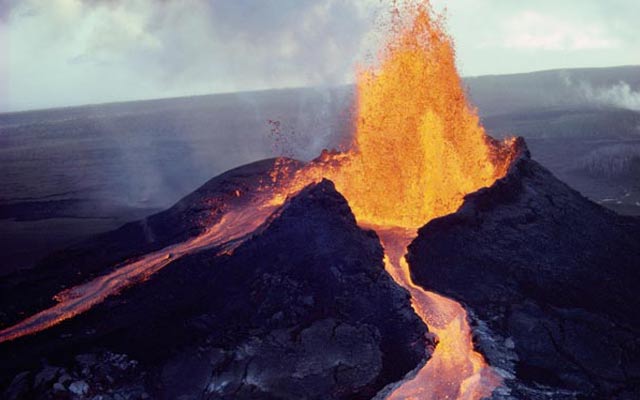
While the whole world looks aspirated as Kilauea volcano covers Hawaii's largest island with waves of hot lava, the Mauna Loa megavolcano is sleeping peacefully not so far from it, height which is 4,169 meters (that is, almost three thousand meters above Kilauea!).
Mauna Loa, whose name means “long mountain”, is the largest active volcano on planet Earth. At the moment, it is a place for pilgrimage for tourists and a platform for the work of representatives of the scientific world.
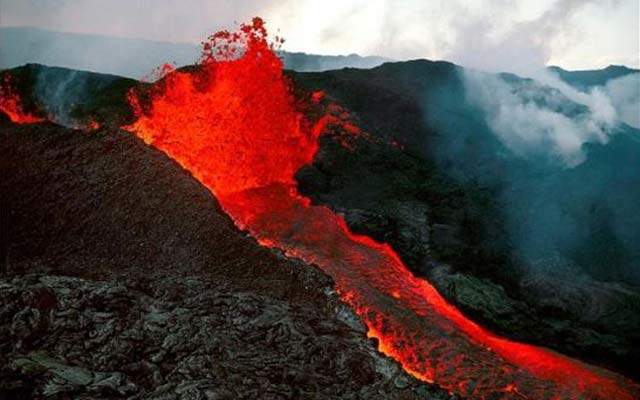
The formation of this volcano began about 700,000 years ago and is still active today. The most recent eruption of Mauna Loa took place in 1984. The underwater part of this volcano is the largest on the planet and is 80,000 cubic kilometers.
The volcano exudes intense lava flows that threaten not only the vast ecosystem that has settled on its slopes, but also the nearest human settlements. Hawaiians in their mythology singled out Mauna Loa as one of the Pele sisters, the goddess of fire, volcanoes and strong winds.
Eyjafjallajokull Volcano, Iceland
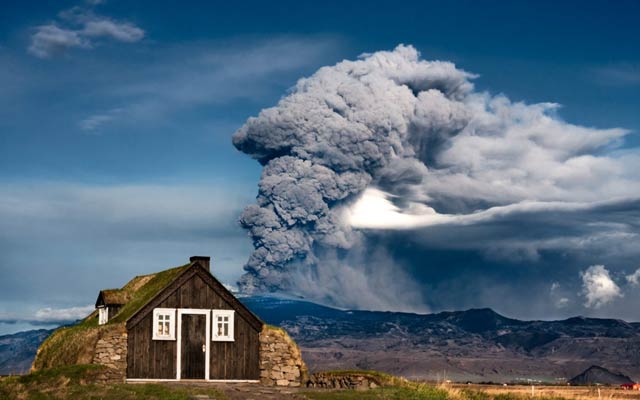
For some time now, Eyjafjallajokull has become one of the most famous volcanoes on our planet. And this is despite the fact that very few people will be able to pronounce its name without hesitation. This volcano is 1666 meters high (a mysterious combination of three sixes, isn't it?) It is located in the south of Iceland.
It is part of several small glaciers in this island nation. The volcano's crater itself, which is between three and four kilometers in diameter, was also covered by glaciers. However, the Eyjafjallajokull eruption, which began on March 20, 2010, melted its ice.
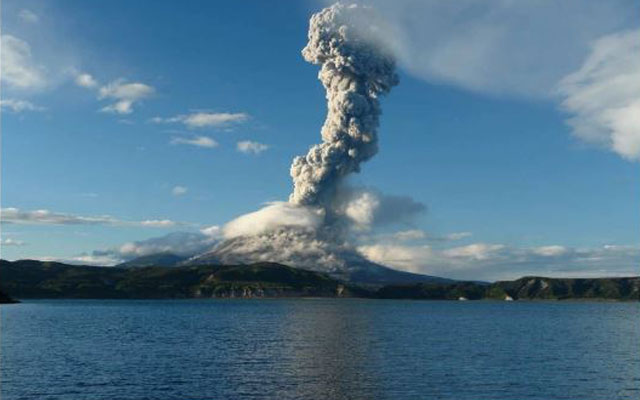
Despite the fact that Eyjafjallajökull is not the largest volcano in Iceland, its eruption caused trouble throughout Europe. The height to which the volcanic ash reached was 13 kilometers. And its significant spread has led to the suspension of flights across Northern Europe.
Read also: 25 interesting facts about volcanoes
Almost a month later, the volcanic ash of the Eyjafjallajökull volcano was recorded in a vast part of the Russian Federation. As a result of the latest eruption, a new fissure formed on the volcano from north to south, which was two kilometers long.
Mount Vesuvius, Italy
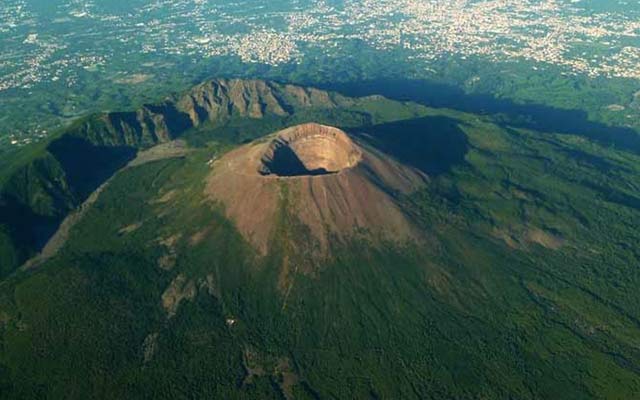
Speaking about the most dangerous active volcanoes on the planet, it would be unforgivable frivolity not to mention the Italian Vesuvius. This volcano, which last erupted in 1944, is the most famous volcano in the world because of the cities of Pompeii and Herculaneum that were wiped out in 79 AD.
The location of this volcano, the only active volcano in continental Europe, makes it one of the most dangerous in the world. The reason is the proximity of densely populated regions. Suffice it to say that Naples, an agglomeration of more than three million people, is just fifteen kilometers from Mount Vesuvius.
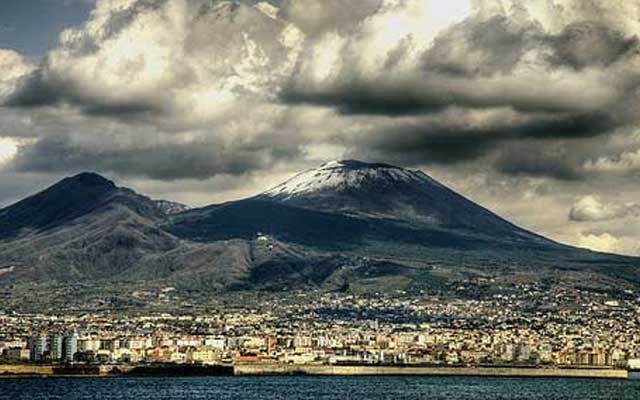
Vesuvius is not very tall — it is only 1,281 meters above sea level. Its fairly frequent activity (one eruption about every twenty years) is due to the relative youth of the volcano — it was formed about 25,000 years ago.
We most often recall the tragedy of Pompeii, where about two thousand people were buried during the eruption. At the same time, we forget that during the eruption on July 26, 1805 (far from the strongest eruption of this volcano!) , Vesuvius took 26,000 lives!
Active volcanoes
Nyiragongo Volcano, Congo
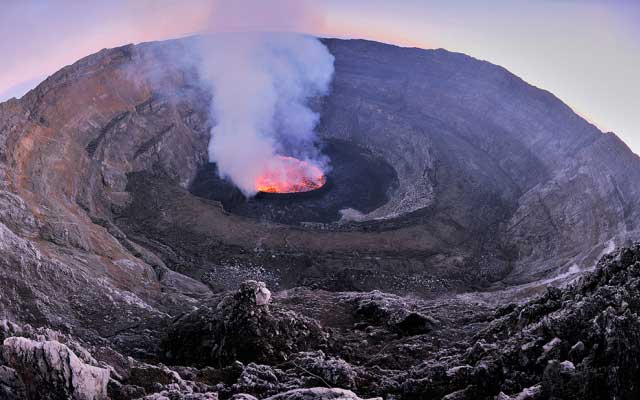
When it comes to activity, the Nyiragongo volcano, which is 3,469 meters high, can rightfully be considered one of the most active. It is known that 34 eruptions have been recorded since 1882. Some of these eruptions continued for months and even years.
In fact, Nyiragongo and its neighbor Nyamlagir are responsible for forty per cent of all the eruptions that continue to be observed on the African continent to this day. If we talk about the most destructive eruptions of Nyiragongo, the last one took place on January 10, 1977.
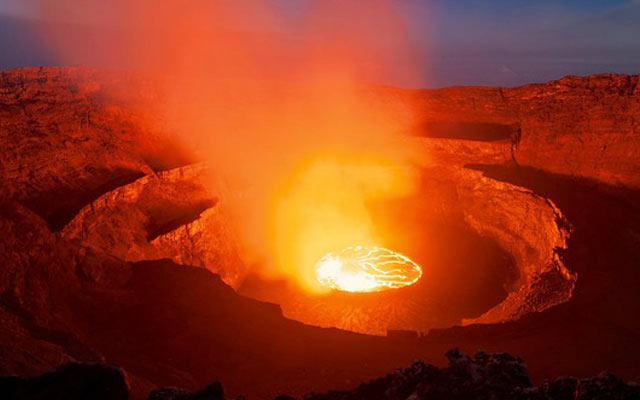
As a result of that cataclysm, about two thousand people died, and the tragedy occurred just within the first half hour after the eruption began. The deadliest eruption of Nyiragongo
this century took place in 2002, when 45 people died under lava flows.
Nyiragongo is also known for having the largest lake of molten lava in its main crater, which is two kilometers in diameter. The lava temperature is 1200 degrees Celsius. The lake of fire itself, which can be seen even from space, is similar in size to a red cyclopean eye, or, if you like, the eye of Sauron.
Taal Volcano, Philippines
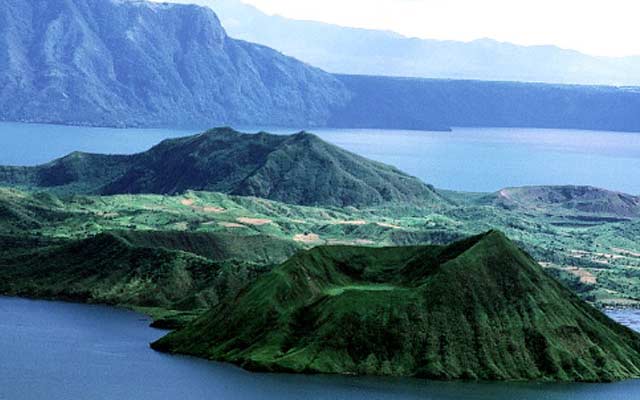
The Taal Volcano, which is only 311 meters high, is located on Luzon Island, just 50 kilometers
from Manila, the capital of more than 1.5 million people The Philippines. In fact, it is one of the smallest active volcanoes on our planet.
Despite his size, Taal sent many thousands of people to the next world. It is known that this volcano has erupted at least thirty times since 1572. It is thanks to its activity that the third largest lake in the Philippines was formed, with a maximum depth of 172 meters. It is also called Taal.
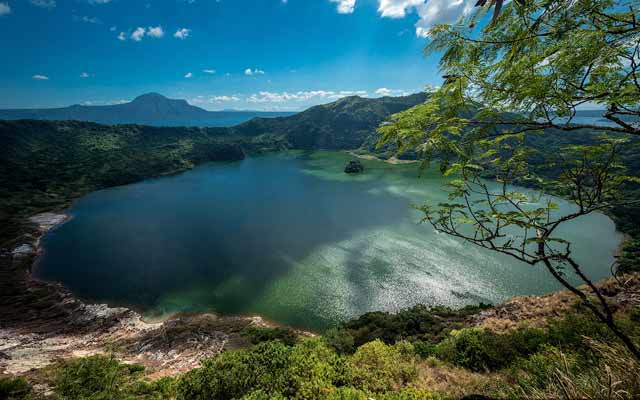
One of the most violent eruptions of Taal, which killed all life within a few minutes within ten kilometers of the volcano, occurred on January 30, 1911. Then masses of overheated steam and hot ash killed 1,335 people. It is noteworthy that the volcano did not throw out lava.
A huge ash cloud, according to sources of those years, was visible at a distance of more than four hundred kilometers. The last powerful eruption of Taal was also recorded in the last century. It happened in 1965, killing more than 200 people.
Merapi Volcano, Indonesia
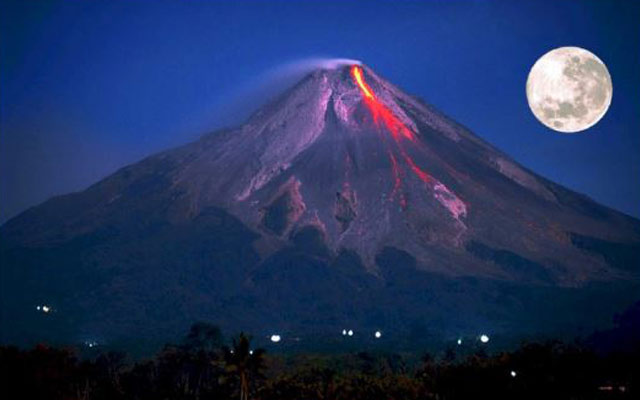
Some volcanoes are destroying settlements and villages, like Nyamlagira and Taal. Others, like Vesuvius, are whole cities. It is known about the Merapi volcano that it destroyed the entire Javan-Indian kingdom, which was located in present-day Indonesia. This happened in 1006.
Merapi's highest point is 2,968 meters. “Mountain of Fire” (which is how the name of this volcano is translated) does not skimp on deadly eruptions. And this is not surprising, since Merapi is the youngest volcano in its group of numerous “relatives” located in the south of Java.
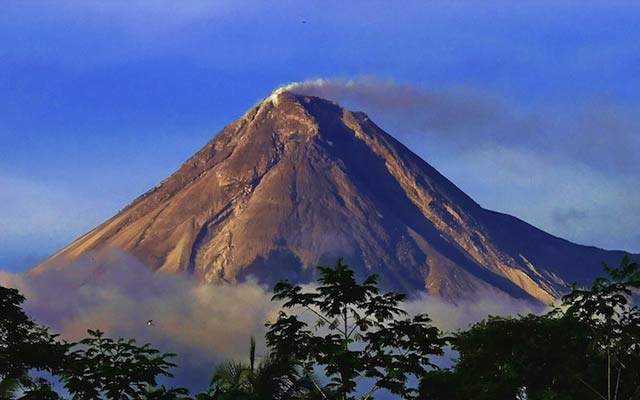
In the first half of the last century, there were 13 eruptions of the “mountain of fire”. It is known, for example, that 1,300 people died in 1930 due to the activity of this volcano. And already in 1974, Merapi wiped out two settlements, and just a year later, another village, causing huge damage to the region's infrastructure. At that time, 29 people died.
Merapi's last powerful eruption in 2010 forced more than 350,000 locals to leave the nearby region. Some of them, however, dared to return, for which many of them paid with their lives — the volcano sent 353 people to the dead.
The most dangerous volcanoes
Galeras Volcano, Colombia
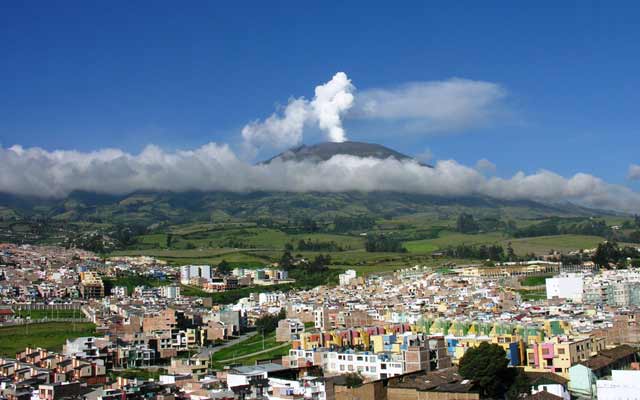
In Colombia, not far from the border with the Republic of Ecuador, is the majestic Galeras volcano. The height of this giant is 4,276 meters. The depth of the crater (about 80 meters) and its diameter (320 meters) turn this volcano into a kind of gun that has been fired more than once.
The Galeras volcano continues to operate, as can be seen from numerous small eruptions. There have not been many really strong eruptions on Galeras. According to scientists, over the past seven thousand years, there have been about six major bursts of its activity.
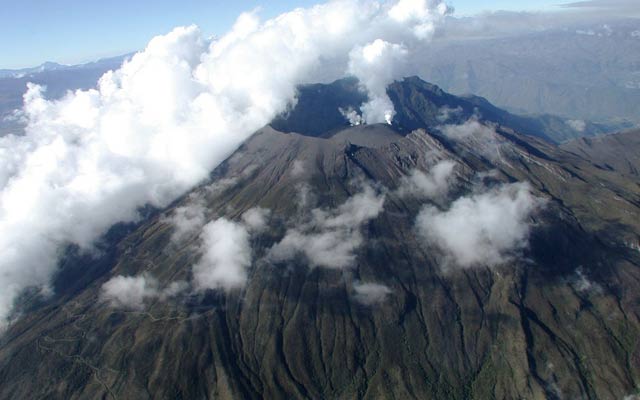
Galeras is a very popular destination for tourists in South America, who also come to admire the beauty of the national mountain located at the foot of the mountain a reserve with an area of several thousand hectares.
Galeras constantly keeps almost half a million people living near the volcano, which, according to experts, has been active for at least a million years. Small eruptions often kill people there, and because of the threat of major authorities, many thousands of residents are periodically evacuated.
Sakurajima Volcano, Japan
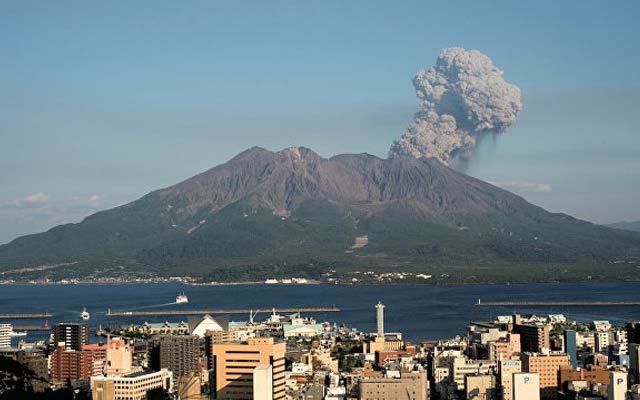
The active Japanese volcano Sakurajima was once an independent island. However, after the 1914 eruption, it became part of the Osumi Peninsula, connected to it through frozen lava flows.
Sakurajima has been continuously active since 1955, posing a serious threat to the city of Kagoshima, which has a population of more than six hundred thousand people. However, this did not prevent (but rather helped) the city's residents from benefiting from such a dangerous neighborhood, making the volcano a tourist attraction.
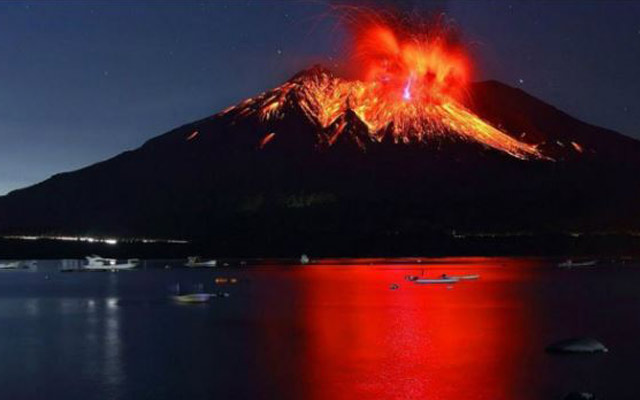
There is a regular ferry service to Mount Sakurajima, and from the city itself, the 1,117 meters high volcano offers breathtaking views. Given the constant small eruptions of the volcano, it is not surprising that residents are used to this. For example, 471 eruptions occurred in 2014 alone!
Read also: A unique giant volcano has been discovered in the Pacific Ocean
In 2016, scientists warned the Japanese authorities about the increasing activity of the volcano, warning that Kagoshima could turn into the “Pompeii of the East”. In fact, Sakurajima is one of the most dangerous volcanoes in the country, although major casualties over the past century have been avoided so far.
Santa Maria Volcano, Guatemala
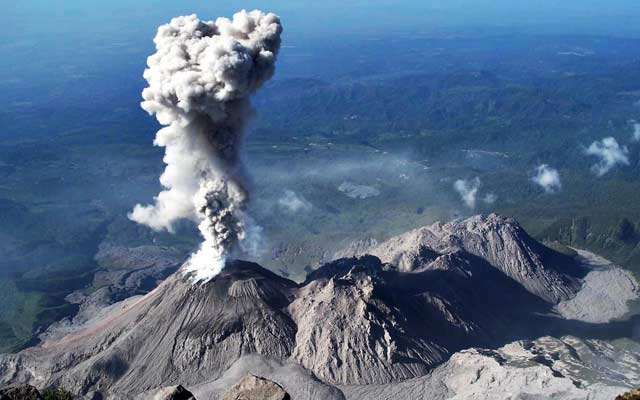
Santa Maria is a fairly young volcano that was first active about thirty thousand years ago. This active volcano, located very close to Guatemala's second largest city, is 3,772 meters high.
Volcanologists consider Santa Maria a time bomb that has been accumulating energy for centuries and is now beginning to give it off. The first eruption of this volcano was recorded in 1902, and before that, Santa Maria was inactive for about five hundred years.
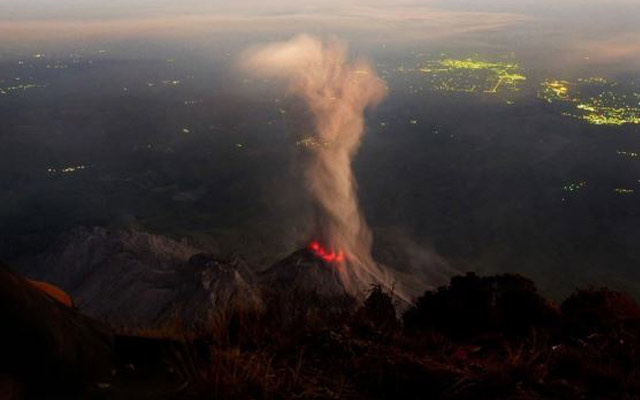
When the explosion occurred in the spring of 1902, the sound wave reached the Republic of Costa Rica, eight hundred kilometers away from the volcano. At that time, almost six cubic kilometers of volcanic material were released into the air. The number of victims exceeded six thousand people…
Given the level of danger that the volcano poses to everyone living in its immediate vicinity, Santa Maria was included in the list of so-called Volcanoes of the Decade — a list the most dangerous and potentially fatal volcanoes on our planet.
Ulawun, Papua New Guinea
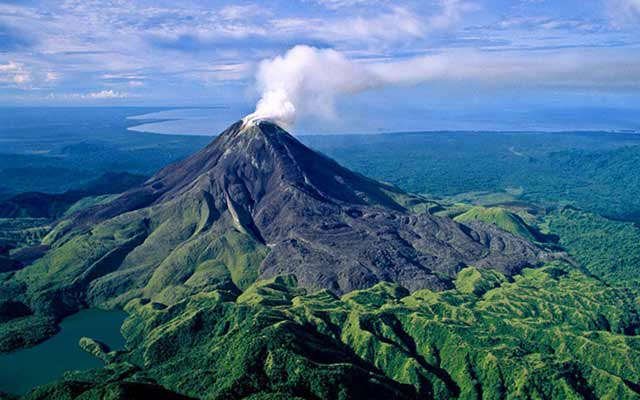
Ulavun is considered one of the most active volcanoes on planet Earth. Since the early 1700s, Ulawun has had 22 powerful eruptions. And smaller eruptions, accompanied by intense underground points, occur in that region on a regular basis.
The main threat to this volcano, which is 2334 meters high, is due to its structural integrity. If a major eruption of Ulawun occurs, it will destroy thousands of square kilometers of land, not to mention human casualties.
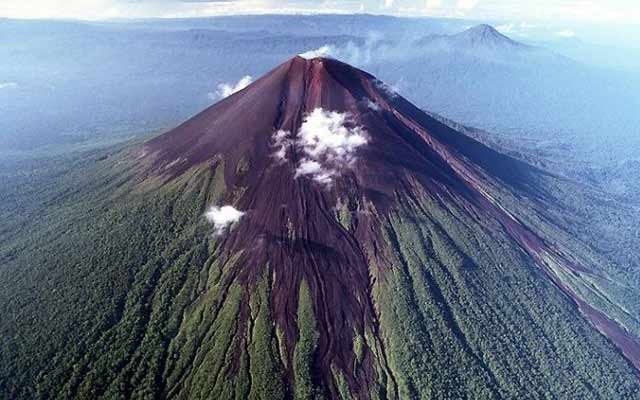
It is known that the volcano began its terrestrial activity in 1878, rising above the water due to faults in the crust caused by volcanic disturbance. Before that, Ulavun was under water, causing earthquakes and severe tsunamis.
In its last eruption in 2010, Ulavun released an ash cloud into the atmosphere that rose to a height of more than four kilometers above the top of the mountain. Although all the numerous eruptions of this volcano did not lead to the death of people, there is a potential threat of serious casualties.