
1. Venice
One of the main treasures of Italy, the magnificent Venice is about to be under water. Every year the city floods by 2-5 mm, waves from cruise liners erode the foundation, and restless tourists aggravate the situation: the old streets can withstand only 30 thousand people a day, but in fact they are twice as many.
If nothing changes, by 2100 the city will disappear from the face of the earth.
2. Maldives
The world Ocean also destroys the idyllic Maldives. Scientists predict that by the end of the century the sea will rise by almost 60 cm, which means that most of the 1,196 islands of the archipelago will go under water. Already today, the life of the Maldivians is complicated by the strongest tides and the warming of coastal waters, so many are thinking about moving to the mainland.
3. Taj Mahal
The grandiose mausoleum of white marble, flaunting in Indian Agra, may collapse in the coming years. The Jamna River washing its foundation is so polluted that it accelerates the rotting of wooden beams, in addition, countless visitors spoil the luxurious floors and walls. It is not surprising that UNESCO recommends closing the Taj Mahal to tourists.
4. The Dead Sea
The Dead Sea — a legendary source of youth, beauty and health — has shallowed by 30 m over the past decades. Due to climate change, mining, waste disposal and other factors, the reservoir literally disappears, and karst funnels form on the exposed land.
To save the unique object, the authorities plan to bring a channel from the Red Sea to it, but this will forever change the local landscape and the composition of the water.
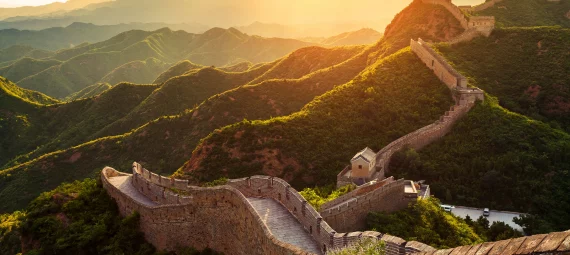
5. The Great Wall of China
The ancient colossus with a length of about 9,000 km has towered over the Celestial Empire since the 3rd century BC. But today the mines for the extraction of gold and other underground resources, located almost 100 m from the structure, cause irreparable damage to the Great Wall of China, already destroyed by almost 70%.
6. The Great Barrier Reef
The Great Barrier Reef is suffering from global warming, tropical hurricanes, increased water acidity, poaching and an endless stream of tourists. The starfish feeding on coral polyps also make their “contribution”: biologists are trying to reduce their population and save the colorful underwater splendor.
7. The Alps
The highest mountain range in Europe will soon cease to delight fans of winter sports with abundant snow. By 2100, more than 70% of the snow cover of the Alps will disappear, but melting can be slowed down by reducing greenhouse gas emissions into the atmosphere.
8. Machu Picchu
Mysterious Machu Picchu has been spared for millennia, but modernity does not spare: crowds of tourists, landslides and inevitable dilapidation leave less and less chance to comprehend the mysteries of the Inca city.
9. Galapagos Islands
Once upon a time, the Galapagos Islands inspired Charles Darwin to create an evolutionary theory: more than 10 thousand rare species of animals and plants fit on the picturesque archipelago. But poachers, cruise liners and (once again) tourists are changing the ecosystem beyond recognition: only the strongest will survive.
10. Egyptian Pyramids
Temporarily inaccessible to organized Russian tourists, the pyramids of Egypt will one day be inaccessible to everyone. Air pollution, natural aging of limestone, mistakes of restorers and insufficient funding are detrimental to the legendary stone blocks.