
 Unbelievable facts
They remain among the most unsolved murders in history, and the identity of the serial killer who killed them remains a mystery.
Suspected mystery figures who came to be known as Jack the Ripper included: an itinerant Polish worker, a famous Victorian physician, Sir William Gull, and even artist Walter Sickert.
But another theory has also emerged. The man who committed at least 11 murders was actually a woman.
John Morris, an author who has researched Jack the Ripper's personality, believes that the only convincing conclusion about who Jack the Ripper was is that it was a woman.
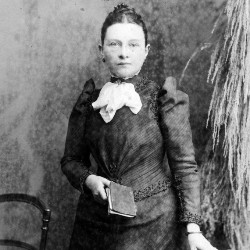
Morris names Elizabeth Williams, the wife of Royal Gynecologist Sir John Williams, as a key suspect, who performed abortion operations at a London clinic and who was also suspected of these murders. Elizabeth was in an unhappy and childless marriage. Her only option was cut off when her family lost their fortune. According to the author, she was willing to do anything to protect her marriage.
Morris's study analyzes the main actors, the killer's motives, and contemporary cases similar to the Ripper murders.
All of the Ripper's victims were prostitutes, murdered and maimed in dark alleys in London's Whitechapel neighborhood. By the surgical nature of the wounds, it can be concluded that the killer had some knowledge of a surgeon.
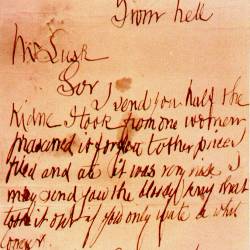 Morris's theory is supported by the findings of Australian scientist Ian Findlay, who in 2006 swabbed letters the Ripper believed to have sent to the police. He compiled a partial profile of the killer's DNA, and the results showed that the person who killed and mutilated at least five women out of 1888 may have been a woman.
Dr. Findlay came to London, where the National Archives contains evidence of murders that are still unsolved. The material, which was kept at Scotland Yard until 1961, includes letters sent to police at the time, some of which are signed “Jack the Ripper”. Most of them are considered forgeries, but some were written by the murderer.
There were hundreds of suspects in this case, but no one has been able to conclusively prove the identity of the murderer.
Key evidence:
1. None of the women were raped.
2. Personal items were stacked in the victim's legs, Annie Chapman, in a typically “feminine” manner.
3. Three small buttons from a woman's boot were found in the blood near the victim Catherine Eddowes.
4. The remains of women's clothing, including a cape, skirt and hat, were found in the ashes of Mary Kelly's fireplace and did not belong to the victim.