
 Unbelievable facts
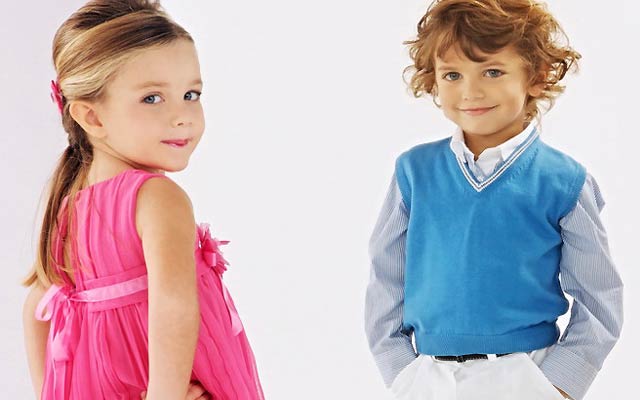
It is unlikely that anyone would argue with the truth of the statement that blue is associated with boys and pink with girls. It's not just about clothes, but also about toys, as well as many other things (bicycles, strollers, etc.).
It doesn't matter at all whether you're buying something for your baby or if you're going to give a gift to your friends' child: you're unlikely to have a shadow of a doubt about which color to choose for girls, and which one is for a boy.
Frankly speaking, it is sometimes difficult to find clothes and toys in neutral colors that would suit children of both sexes. But you have no idea to dress, for example, a little boy in pink. After all, people will immediately think it's a girl!
However, this has not always been the case. If you dig deeper into history to understand what traditions were used to emphasize the sex of the child, it turns out that we did not come to the current separation immediately ( Moreover, different countries have different prerequisites).
We bring to your attention several versions that offer an answer to the question of why blue is associated with boys, and pink is associated with girls. Which one is closer to you — foreign or domestic — decide for yourself!
Children's colors
White is the basis of the basics or where it all started
To understand how these rigid frameworks, limiting the use of blue for male babies and pink for female babies, came about, we need to look deep into history, when this division did not yet exist.
A certain Joe B. Paoletti, a professor at the University of Maryland in College Park, Maryland, USA, studies the apparel and textile industry in depth along with the history of fashion and its role in American and European culture.
Moreover, Paoletti is the author of a book she devoted to studying this issue related to the separation of colors for girls and boys. At the same time, it shoveled tons of historical literature.
First of all, Paoletti drew attention to the traditions of clothes in families before the period, when there was a clear separation of colors for different sexes. As it turned out, people used the same colors for both boys and girls back then.
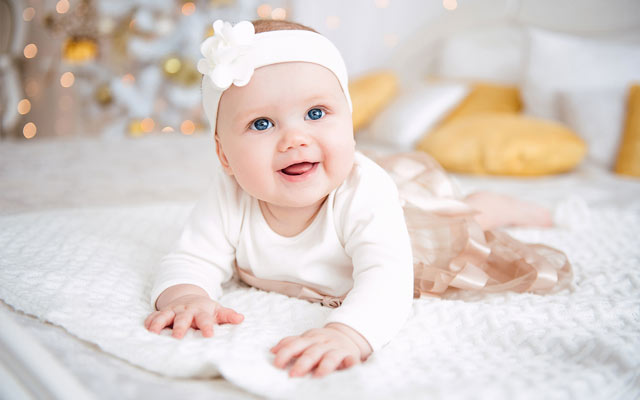
Newborn babies of both sexes were carefully wrapped and dressed in white clothes. However, this was more of a practical approach than a fad, as it is much easier to determine that a baby's clothes have become dirty when they are white.
This is how children were dressed until the age of six or seven, after which they were dressed in clothes that resembled their parents' clothes (boys' clothes are fathers' clothes, and clothes girls — mothers' clothes). And around the same period, children were cut their hair for the first time.
Pink color for boys — pastel colors replace white
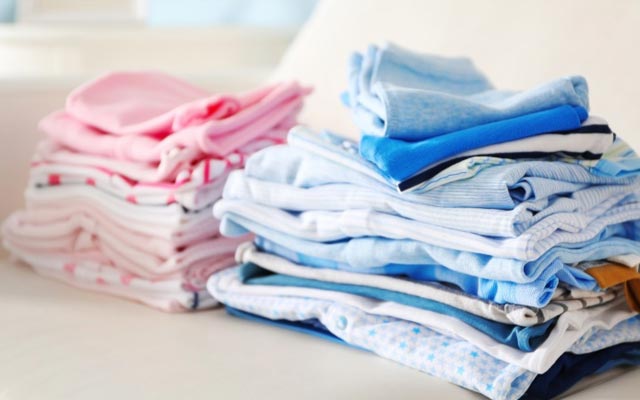
Professor Paoletti found that humanity has gradually become accustomed to the fact that each of the two sexes began to match a certain color. However, the very idea of associating pastel colors (soft, muted colors) with children became popular in the mid-19th century in America and Europe.
Despite this, it took more than seven decades until people decided on their preferences for using colors for children's clothing, underwear, and other things. It is known, for example, that in 1918, one of the ads called for buying pink for boys.

The advertiser insisted that pink was a more intense and “stronger” color. The same manufacturer believed that pastel blue tones were best for girls.
There were other equally controversial advertisements in which consumers were encouraged to separate colors not by gender, but by the color of the child's eyes or hair. It was believed that the blue clothes worn by a blue-eyed toddler (or baby) would accentuate the color of his/her eyes — and this is the best reason.

Some store sales teams began to use color separation as an effective method of selling products (mostly pink and blue).
It was then that certain colors of clothing were recommended for babies and just for young children. At the same time, American clothing stores in New York, Boston and Chicago offered pink for boys; and, as you know, it is large cities that set fashion trends for the whole country.
The war divided by color
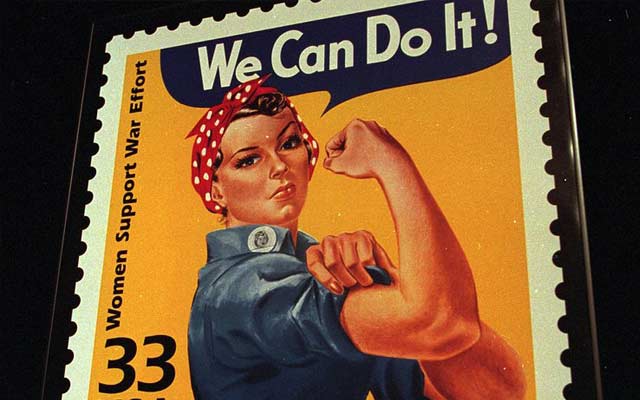
In the 1940s, especially at the end of World War II, public consciousness clearly strengthened its ideas about gender division in issues related to certain modern subjects (for that period) of clothing and its colors.
This division spread quite quickly in society also because clothing sellers actively had a hand in it. During the war, many women wore blue overalls to replace men who went to war in men's jobs.
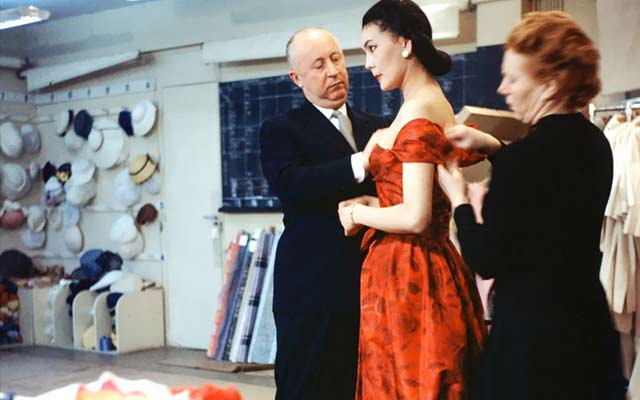
And already in 1947, fashion designers (Christian Dior and others) began to promote post-war clothing. What did this mean for women? Just the beginning of a new era, when soft, floral pink tones were becoming the norm for women.
And since then, people have finally become accustomed to the fact that pink is the color of femininity, and blue is the color of men. This process has also been facilitated by the fact that the war has just ended.
Read also: Psychologists: Your favorite color in clothes will tell you everything about your character
People who faced her brutality wanted to follow new rules that would perfectly separate men and women. And so women willingly bought pink, and men wore blue.
Male color
Women's rights movement, or feminists against pink

According to Paoletti's historical research, the women's equality movement, which prompted social change in the 1960s, led to a strict separation by color among the sexes are no longer so strict for a while.
There was no split in the public, but, according to the professor, for several years during the 1970s, some of the largest retailers practically abandoned from the idea of offering pink for girls.
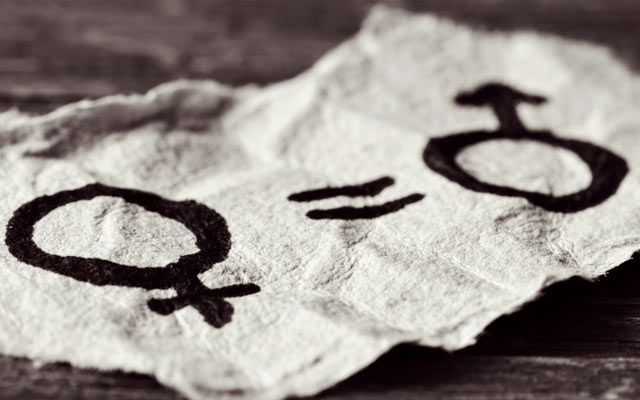
The reason was that not everyone adequately perceived the desire to dress women in pink. Feminists believed this took them back decades, when it was necessary to prove equal rights between men and women.
When women returned to kitchens after the war, giving way to their returning husbands in factories, they deliberately denied careers, changing blue overalls for pink aprons.

Feminists of the 1960s wanted nothing to do with this “rosiness”. They believed that women are only taken seriously when they dress like men.
Women argued (and quite reasonably) that there are no biological prerequisites for women to prefer pink to blue in nature. In those years, some people began to return to neutral colors of clothing.
1980s — capitalism was stronger than feminism

The period of gender equality in clothing colors continued until the 1980s. Then the rule “blue for boys, pink for girls” began to work again in society.
According to Paoletti, the reason for this reboot was very simple — money! The activity of producers and sellers was spurred by the fact that parents were able to determine the sex of the child before birth. They have become more active in promoting blue for boys and pink for girls.
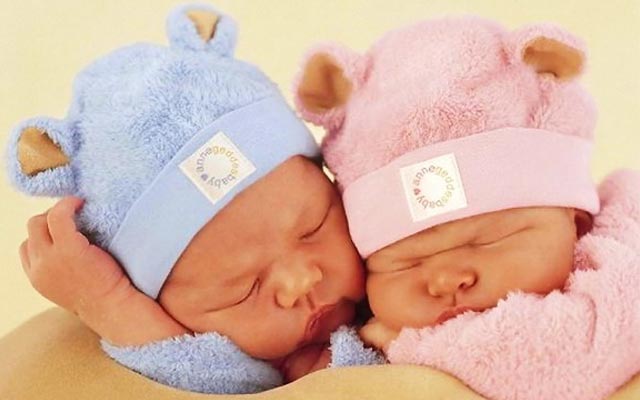
Imagine how many people have two or more children! With this separation of sexes by color, it is no longer so easy to invite your youngest son to wear his older sister's pink pants! After all, this would run counter to social norms.
All in all, this was a period when women who grew up in the age of gender equality in the 1960s gave birth to children themselves and then relearned that girls needed pink ones and boys needed blue ones pants. Whereas femininity was not a good compliment in the 1960s, things returned to normal in the 1980s.
Today, the borders are blurred, but… they have become clearer

Today we live in a society where pink is considered more suitable for girls and blue is more suitable for boys. To verify this, it is enough to go shopping for newborns or toy stores.
Nowadays, even such a thing as toothpaste can be produced in a special convenient package of one color or another to make it easier for parents to understand whether this paste is intended for girls, or for boys.
The trends are quite obvious, although all this sometimes looks quite ridiculous. Although recent attempts to get to the bottom of the historical background of this separation are quite common, researchers usually face the same problem as those trying to understand what came first, the chicken or the egg.
And really: did we assign pink and blue colors to women and men because they prefer these colors? Or do they gravitate to these colors because they and other children have been dressed this way since childhood?
As part of a study conducted in 2011, young children were asked to choose between two almost identical subjects. One of them was pink and the other was of a different color.
One-year-old children chose the same number of times a pink object and an object of a different color. At the age of two, girls were more likely to choose a pink item. By the age of four, this trend had become even more pronounced: more girls were choosing a pink object, more and more boys were choosing a different color item.

In another study, researchers divided a group of children aged three to five into two different groups based on the colors of their shirts. Each group was told that their shirt color was the best.
Three weeks later, the researchers saw firsthand the results of their “work”: children who wore blue shirts chose blue toys to play; those who wore red shirts were drawn to red toys.
The results of another study conducted by specialists from Erasmus University in Rotterdam are known; they make it clear that the persistent association of pink with femininity sometimes causes people have an unexpected reaction.
The researchers drew attention to the fact that when raising funds to support breast cancer patients, flyers and pink advertisements are less likely to raise funds. And women give the least.
It is believed that women who refuse donations are outraged by the fact that their color, that is, pink, is used to raise funds. This theory seems silly, but it is no more stupid than the other, which explains why women are more attracted to red than men.
According to this theory, women are inextricably linked to the color red, which is due to the period in human history when people ate foraging. Like, the berries are red. And the more a woman gravitates towards red, the easier it is for her to find these berries.
Feminine color
The division by color was introduced… by the Nazis?!

Hardly many of you expected that you could move from pink and blue toys, pacifiers and pants to Nazi Germany. However, the Internet is filled with rumors that it was the fascists who taught us to separate sexes by color.
It is known that to identify people with non-traditional sexual orientation in concentration camps, the Nazis used a sign called Rosa Winkel in German, or the Pink Triangle .

However, in his book, Paoletti denies even the slightest possibility that there may be any connection between pink, femininity and Nazi Germany's Pink Triangle.
Paoletti conducted a whole study that debunked this myth, showing that pink was already associated with the female sex in the 1930s. In those years, people of non-traditional sexual orientation were not favored, to put it mildly.
This means that if pink became popular because of, say, lesbians, clothing sales and advertising departments certainly wouldn't use it to promote them back then. Especially since homosexuals were also hung pink (not blue!) on their chest triangle.
In addition, no one could secretly promote pink as a symbol used to label gay people in concentration camps. The fact is that for 25 years after the end of the war, the story of the Pink Triangle was known only in narrow circles, and it was not customary to talk about it much.
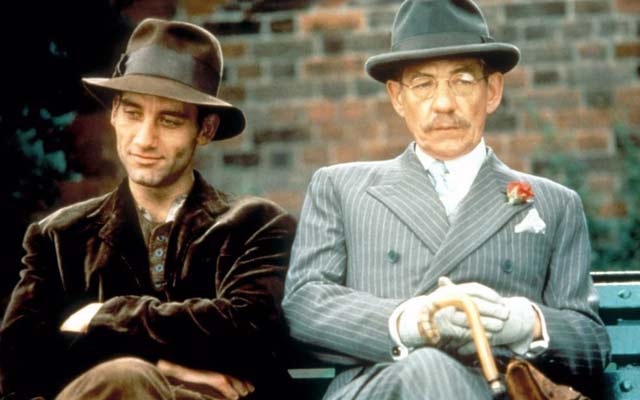
This symbol became widely known in 1997, thanks to famous actors Ian McKellen, Clive Owen, Mick Jagger and others who played in the movie “Inclination”, where the theme is pink the triangles in the concentration camp were fully opened.
The favorite color of modern man: pink is far from being held in high esteem
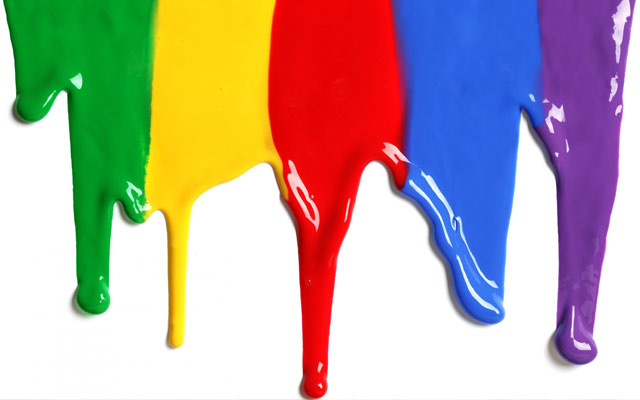
In 2012, a sociologist at the University of Maryland conducted a survey among 2,000 adults. He asked them a simple question: what would be your favorite color if you chose from blue, purple, pink, red, orange, yellow, and green?
The vast majority of people chose blue — 42 percent of them were men and 29 percent were women. If we talk about women, purple lovers came close to blue lovers (27 percent of them were).

And the most surprising thing, as it turned out, pink is not at all included in the list of favorite colors: only one percent of men and seven percent of women chose it as their favorite color.
When it comes to other colors, women prefer orange even less (3% of women). Men like it more than pink — about seven percent of men chose it.
Read also: 10 interesting explanations of how things got their colors
Here's the main answer — blue is the favorite color of the majority of the population, regardless of gender. Only a few men like pink, and a lot of women like blue.
Is Pavel I the culprit of gender color separation in Russia?
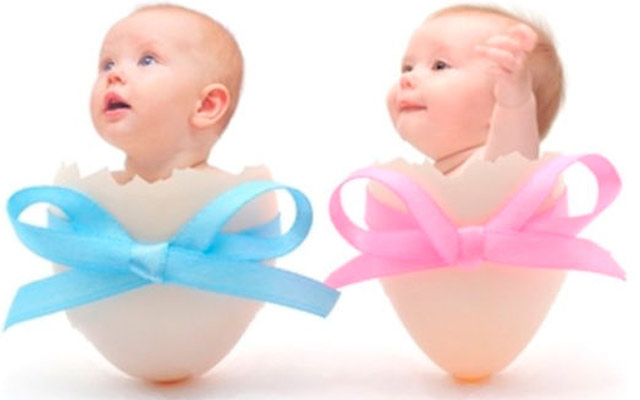
According to this version, it feels like we are ahead of the rest of the world. At least, many historians believe that such a popular worldwide stereotype (pink for girls, blue for boys) has historical background in our country.
We are referred back to 1797. To be more precise, to one of the decrees of the Emperor of Russia and autocrat Paul I, by which the son of Catherine II and Peter III apparently decided to improve the birth rate situation among members of the Russian Imperial Family.
According to this decree, every Grand Duke and his princess, in whose family a child was born, became holders of orders. Thus, the princes received the Imperial Order of the Holy Apostle Andrew the First-Called, which was worn on a wide blue silk ribbon.
When freed from the burden, the Princesses of the Grand Dukes were awarded the Order of the Holy Great Martyr Catherine, who was also symbolically called the Order of Liberation. This order was worn with a red ribbon with a gold border.
Among other things, princes and princesses who were born were girded with a ribbon of the appropriate color, which later became a custom. Thus, boys were girded with a blue (or blue) ribbon of the Order of St. Andrew, and girls with a red (or pink) ribbon of the Catherine Order.