
 Events
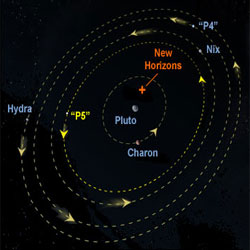
As observations using the Hubble Space Telescope have shown, the dwarf planet Pluto has another satellite, in addition to its already known “moons” — Charon, Hydra, Nikta and R4. This company has been joined by a fifth satellite, temporarily named P5.
According to reports in the astronomical magazine Sky & Telescope, P5 is a very small satellite, potentially smaller than P4, discovered a year ago, in July 2011. It is assumed that P5 has a diameter of 13 to 34 kilometers, while the largest moon of Pluto, Charon, has a diameter of 1043 kilometers. The diameters of Nikta and Hydra range from 32 to 113 kilometers.
P5 orbits Pluto at a distance of about 42,000 kilometers, in the same plane as the rest of the satellites. This may indicate that during the existence of the Solar System, Pluto has been collided with cosmic bodies, and the planet's debris has been collected in its orbit, creating a satellite system, which we can see today.
The fact that more and more satellites are being found around Pluto raises some concerns among scientists due to the upcoming mission to this dwarf planet in 2015. Scientists say that it is possible that there are other small satellites orbiting Pluto. They are also concerned that there may be clouds of dust with small debris around the planet, which could make it difficult to study the planet. Satellites can form fragmentary rings, and clouds of cosmic dust could damage the New Horizons space station, which will reach Pluto in 2015 and fly past the dwarf planets at great speed.
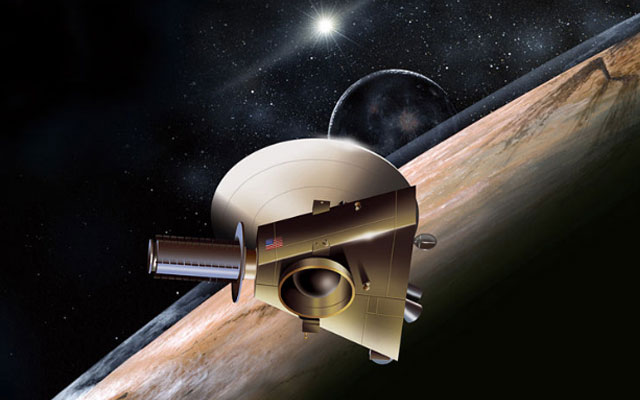
As new satellites are discovered, astronomers have more accurate data, and they can find ways to avoid dangers. Today, they're discussing the possibility of sending the New Horizons probe into Charon's orbit. There is reason to believe that Charon's gravity may have cleared the area around Pluto, so too much dust has not accumulated around the planet, which reduces the risks of suspected debris colliding with the ship .